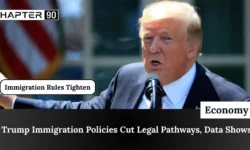




Former President Donald Trump has once again weighed in on U.S. monetary policy, arguing that the Federal Reserve should lower interest rates if financial markets continue to perform well. His comments revive a familiar debate over the relationship between politics, markets, and central bank independence — an issue that has resurfaced repeatedly in recent years.
Trump’s argument centers on the idea that strong stock market performance reflects economic health and should be rewarded with looser monetary policy. In his view, lower interest rates could further boost investment, support growth, and reinforce positive market momentum. This perspective aligns with his long-standing emphasis on equity markets as a key measure of economic success.
However, the Federal Reserve operates under a different mandate. The central bank’s primary goals are price stability and maximum employment, not stock market performance. Fed officials typically base rate decisions on inflation data, labor market conditions, and broader economic indicators rather than equity indexes. While markets react to Fed policy, they are not meant to dictate it.
Economists caution that tying interest-rate decisions too closely to market gains could increase financial risk. Lowering rates during periods of strong asset performance may fuel speculative behavior, inflate asset bubbles, and undermine efforts to control inflation. Many analysts argue that central bank credibility depends on maintaining independence from political pressure and market sentiment.
Trump’s remarks also highlight ongoing tension between political leaders and the Fed. During his presidency, he frequently criticized the central bank for keeping rates too high, especially during periods of market volatility. Those criticisms sparked concern among policymakers about preserving the Fed’s autonomy and insulating monetary policy from political influence.
Supporters of Trump’s view argue that interest rates remain restrictive and that easing policy could support businesses, consumers, and government borrowing. They point to slowing inflation and signs of economic cooling as reasons to consider rate cuts sooner rather than later.
Meanwhile, Fed officials have continued to signal caution. While acknowledging progress on inflation, they emphasize the need for sustained evidence before making significant policy shifts. Markets may rally or retreat in the short term, but policymakers stress that rate decisions must be guided by long-term economic stability rather than immediate market reactions.
Ultimately, Trump’s comments reflect a broader debate about how economic success should be measured and managed. Should markets influence policy, or should policy remain focused strictly on fundamentals? As economic uncertainty persists and political rhetoric intensifies, that question is likely to remain at the center of discussions around interest rates and the future direction of U.S. monetary policy.