


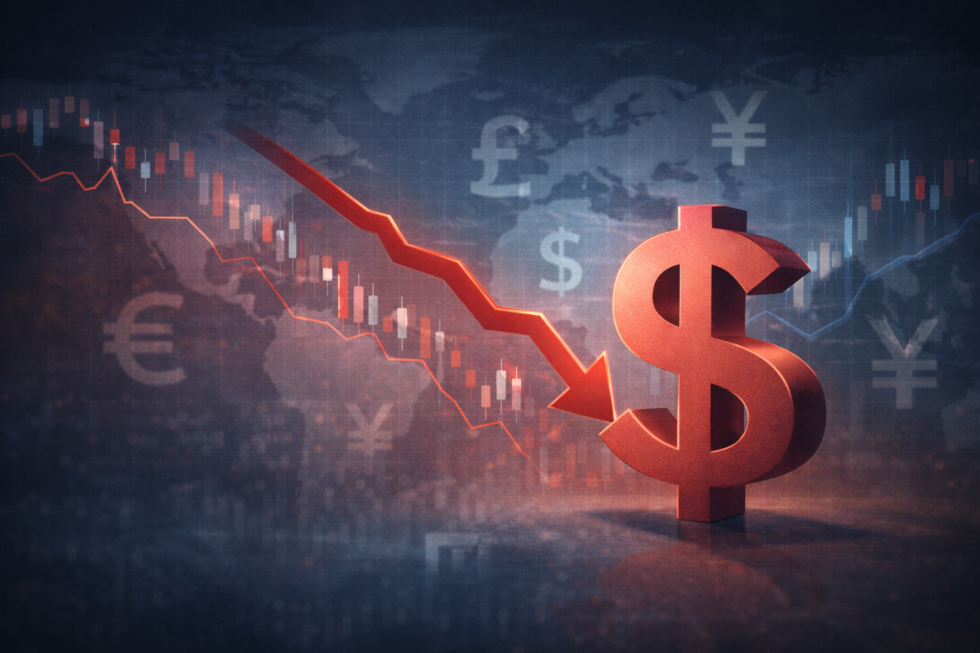
The US dollar is on track for its weakest annual performance in years, reflecting mounting uncertainty around monetary policy and growing unease in global financial markets. After a period of strength fueled by aggressive interest-rate hikes, the currency has struggled to maintain momentum as investor confidence shifts.
One of the primary factors weighing on the dollar is uncertainty surrounding central bank leadership and policy direction. Markets are increasingly sensitive to signals about future interest rates, inflation control, and economic stability. Conflicting expectations have made it difficult for the dollar to find clear support, particularly as investors reassess long-held assumptions about US monetary dominance.
Interest-rate dynamics play a crucial role in currency performance. When rates rise, the dollar typically benefits as global capital flows toward higher returns. However, recent developments suggest that the tightening cycle may be nearing its end. If rate cuts or prolonged pauses become more likely, the appeal of holding dollar-denominated assets could diminish.
Political and institutional tensions have also contributed to volatility. Debates over central bank independence, leadership decisions, and fiscal priorities have introduced additional risk into currency markets. For investors, uncertainty is often more damaging than unfavorable outcomes, as it complicates long-term planning and hedging strategies.
At the same time, other global currencies have gained relative strength. Improvements in economic outlooks abroad and shifting capital flows have reduced the dollar’s traditional safe-haven advantage. Emerging-market currencies, in particular, have benefited from improved risk appetite and diversification away from US assets.
Despite its recent weakness, the dollar remains a cornerstone of the global financial system. It continues to dominate trade settlement, reserve holdings, and international financing. However, the current downturn highlights how sensitive even the world’s most influential currency is to policy clarity and institutional credibility.
Looking ahead, the dollar’s path will likely depend on how decisively policymakers communicate their intentions. Clear guidance could stabilize expectations and restore confidence, while prolonged uncertainty may keep pressure on the currency into the coming year.
For investors, the dollar’s challenging year serves as a reminder that currency trends are shaped by more than just economic data. Trust, transparency, and policy consistency play equally important roles. As global markets enter a new phase, the dollar’s performance will remain a key signal of broader financial stability.