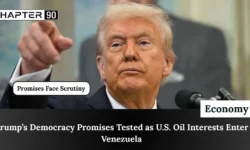



The arrest of Venezuela’s long-time leader has opened a new and potentially dangerous geopolitical front, reshaping power dynamics between the United States and China. The move, backed by Washington under the leadership of Donald Trump, signals a bold escalation in US foreign policy and marks a significant shift in how global influence is being contested.
At the center of this development is Venezuela’s strategic importance. Rich in oil and positioned at the crossroads of the Americas, the country has long been a focal point of international rivalry. By acting decisively against Venezuela’s leadership, the United States is not only asserting its influence in the region but also challenging China’s growing economic and political footprint in Latin America.
China has invested heavily in Venezuela over the years, extending loans, infrastructure support, and energy partnerships. These ties were designed to secure long-term access to resources while expanding Beijing’s global reach. The sudden disruption of Venezuela’s leadership threatens those investments and introduces uncertainty into China’s regional strategy.
From Washington’s perspective, the move sends a clear message: the US is willing to take aggressive steps to counter rival powers in its sphere of influence. This approach aligns with a broader strategy aimed at reasserting dominance in regions where China has steadily gained ground through economic diplomacy rather than military presence.
The decision also carries significant risks. Any prolonged instability in Venezuela could destabilize the wider region, affect global oil markets, and trigger diplomatic backlash. Moreover, confronting China indirectly through actions in third countries raises the possibility of escalating tensions beyond Latin America.
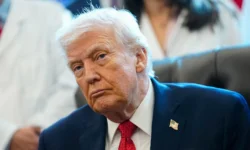
Politically, the move reinforces Trump’s image as a leader willing to break with traditional diplomatic caution. Supporters view it as a decisive stand against authoritarian allies of US rivals, while critics warn that such actions could undermine international norms and provoke unintended consequences.
The situation underscores how modern geopolitics is increasingly shaped by competition over influence rather than territory alone. Energy resources, strategic alliances, and political loyalty now form the battlegrounds of global power struggles.
In conclusion, the arrest of Venezuela’s leader is more than a regional development. It represents a calculated geopolitical maneuver that opens a new front in the broader US-China rivalry. How both powers respond will shape not only the future of Venezuela, but also the balance of influence across the global stage in the years ahead.