



Canada’s energy sector is facing a moment of scrutiny as geopolitical shifts in Venezuela prompt questions about the future of the global oil market. With Venezuela holding some of the world’s largest oil reserves and plans afoot to boost production following political changes, observers wondered whether Canadian crude—especially heavy oil from the oil sands—could lose market share. But Canadian leaders have been quick to reassure markets, emphasizing that Canadian oil’s reputation for stability, reliability and lower risk gives it an edge even as Venezuela’s output grows.
At the heart of the discussion is what buyers value most in a supplier. While Venezuela’s crude resources are vast, they have long been hindered by political instability, underinvestment, and aging infrastructure. Canada’s oil industry, by contrast, benefits from stable governance, clear regulatory frameworks and established export routes, traits that many global buyers consider just as important as the price of oil itself. Prime Minister Mark Carney underscored this point, saying Canadian crude will remain competitive because it is “low risk, clearly low risk,” which matters when companies and countries are making decisions that involve long-term contracts and financing.
There is also a cost element that works in Canada’s favour. Over recent years, producers have worked to reduce marginal costs and improve operational efficiency. Projects aimed at lowering carbon emissions—such as carbon capture initiatives in Alberta—are another part of Canada’s pitch to the world, especially among buyers increasingly focused on environmental performance. Carney highlighted that lower cost and “low carbon” characteristics help set Canadian oil apart in what is likely to be a crowded heavy-oil market.
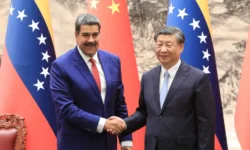
Political factors come into play as well. The recent capture of Venezuelan leader Nicolás Maduro and shifting US policy toward Venezuelan oil has awakened interest from American energy firms prepared to invest in reviving production. But even in this optimistic scenario for Venezuela, experts say it may take time—years of investment and repair work—before Venezuelan output approaches its past peaks. Meanwhile, Canada is doubling down on efforts to diversify export markets, including plans for new pipelines to the Pacific coast to reach Asian buyers, reducing reliance on the United States alone.
The situation also reveals how much investor confidence and political stability matter in global commodity markets. Buyers weigh risk alongside price, and Canadian crude’s access to reliable legal structures and predictable policies gives it a resilience that goes beyond mere numbers on a chart. That’s why, according to officials, even in a future with increased Venezuelan production, Canadian oil can remain a go-to choice for markets seeking safer, long-term supply agreements.
In essence, the conversation highlights not just competition between two sources of heavy crude, but the broader behavioural economics of energy markets: companies and nations don’t just buy oil—they buy certainty, predictability and trust. In that calculus, Canada believes it still has the advantage.