



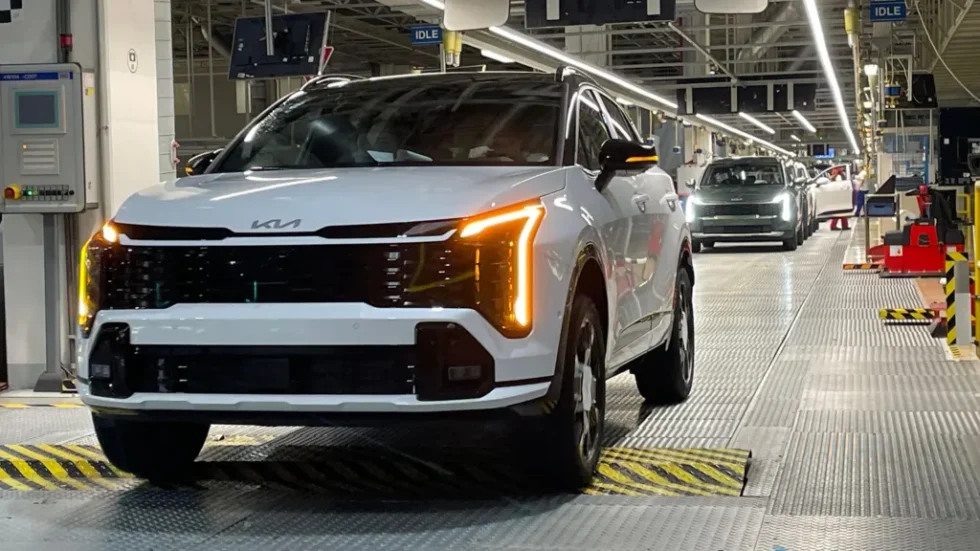
Slovakia’s rise to the top of global car production isn’t a story of sudden innovation or flashy breakthroughs. It’s a quieter, more calculated business story one rooted in margin control, operational discipline, and long-term strategic positioning. What looks like an industrial success on the surface is, at its core, a lesson in how profit is built patiently inside global supply chains.
From a human-behaviour perspective, Slovakia’s advantage came from understanding incentives. Governments, workers, and multinational automakers aligned around a shared objective: stability over spectacle. Instead of chasing short-term wins, the country focused on becoming indispensable reliable, cost-efficient, and predictable. In business, predictability is often more valuable than ambition.
Major carmakers didn’t choose Slovakia because it was the cheapest option. They chose it because it offered consistent returns. Labor costs remained competitive but skilled. Infrastructure investment was steady, not excessive. Regulation stayed business-friendly without being reckless. This balance allowed manufacturers to scale production while protecting margins.
Profitability thrives in environments where friction is minimized. Slovakia reduced friction at nearly every stage of the automotive value chain from supplier clustering to logistics efficiency. Parts travel shorter distances. Downtime is limited. Output per worker remains high. These aren’t headline-grabbing factors, but they directly translate into stronger operating margins.
Human behavior inside factories also mattered. A workforce accustomed to precision manufacturing developed a reputation for reliability. That trust reduced oversight costs, rework, and delays all silent profit killers. Over time, this behavioral consistency became an asset just as valuable as machinery.
Another key factor is scale concentration. Slovakia produces more cars per capita than any other country, creating economies that compound over time. Shared suppliers, standardized processes, and repeat investment cycles drive costs down further with each expansion. Profitability improves not because prices rise, but because inefficiencies disappear.
From a business perspective, this model also insulated Slovakia during industry disruptions. When supply chains tightened or demand fluctuated, manufacturers operating there faced less volatility. Stable environments protect earnings during uncertainty a lesson many markets learn too late.
Crucially, Slovakia didn’t try to own the brands. It chose to own the process. By embedding itself deeply into global production networks, it ensured recurring investment rather than one-off wins. This is a classic long-term profit strategy: become essential rather than visible.
Today, Slovakia’s automotive dominance isn’t just about volume it’s about sustained profitability across cycles. It demonstrates how disciplined execution, aligned incentives, and human reliability can outperform louder industrial strategies.
In business, success isn’t always about leading innovation. Sometimes, it’s about mastering efficiency so well that profit becomes inevitable. Slovakia did exactly that and quietly turned manufacturing into a durable economic engine.