



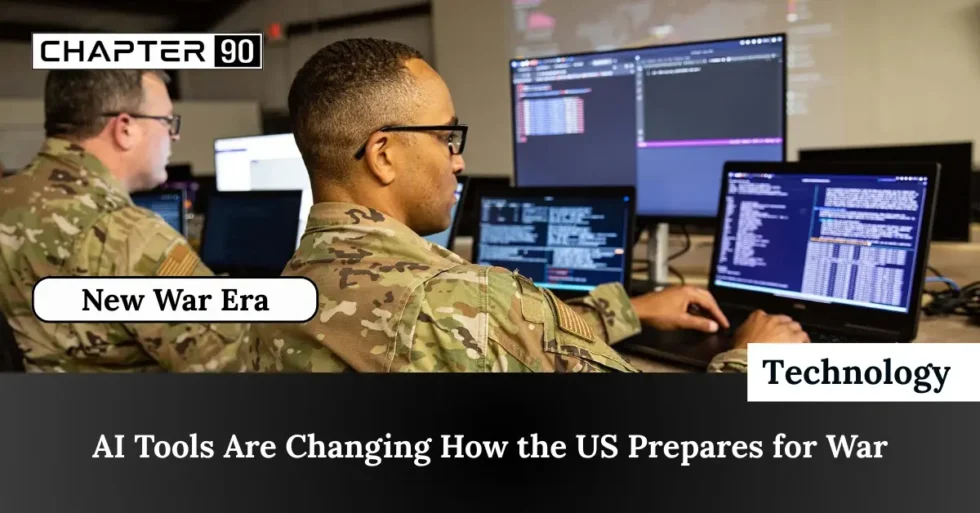
Preparing the US Armed Forces for AI and Network-Centric Warfare
The United States cannot prepare for future conflicts using outdated thinking. Modern wars are no longer limited to physical battlefields. They unfold through data, networks, cyber operations, and advanced systems. Declaring the US military an AI-first fighting force signals a serious shift toward this reality, driven by President Trump and Secretary of War Pete Hegseth.
Acknowledging the Speed of Rivals
President Trump has made clear that global competitors have moved faster than the US in recent years. As Secretary Hegseth said during remarks at SpaceX, emerging technology can no longer be treated like a side experiment. It must be handled as a frontline military priority. That belief now sits at the center of Hegseth’s AI Acceleration Strategy.
China and Russia Are Not Waiting
China and Russia already deploy artificial intelligence across surveillance, cyber warfare, electronic systems, and autonomous weapons. They are not slowed by layers of review or internal hesitation. For too long, the Pentagon bureaucracy has delayed progress. Hegseth’s approach makes it clear that this period of inaction is ending.
AI as a Core Combat Capability
Under Hegseth’s leadership, AI is no longer framed as research or support. It is treated as a direct warfighting tool. The integration of systems like Grok AI and secure platforms such as GenAI.mil aims to give US forces sharper intelligence, quicker decisions, and real battlefield advantages.
From Pilot Programs to Real Deployment
For years, the Defense Department relied on long pilot projects that produced reports instead of results. While the US tested slowly, China invested heavily, and Russia deployed AI tools in active operations. The new strategy flips this model. Build fast, test in live conditions, deploy what works, and improve it in the field.
Cutting Through Internal Barriers
Hegseth is also confronting internal resistance. Following President Trump’s direction, he is moving against entrenched bureaucracy that slows innovation. Recent reductions in the Department of War workforce reflect a focus on accountability. The aim is not disruption for its own sake, but removing delays that prevent troops from getting the tools they need when it matters.
Raising Standards and Removing Distractions
Another shift under Hegseth is cultural. He moved early to eliminate DEI programs, arguing they distract from readiness and performance. In his view, military standards must be clear and focused. Artificial intelligence responds to data and objectives, not ideology. Military AI must be built to function under pressure and deliver results.
Urgency in Training and Industry Partnerships
Speed is critical. Service members cannot wait years for outdated systems. AI training must reach every rank, and partnerships must expand beyond traditional defense contractors. Hegseth’s Arsenal of Freedom tour sends a clear signal to tech firms that the military needs capable systems now, not later.
Congress and Smarter Defense Spending
Congress plays a key role in making this shift real. This includes backing a proposed $1.5 trillion defense budget and improving how the government spends money. Faster acquisition and open competition would allow newer firms like Rune Technologies, Anduril, and Palantir to compete directly, instead of defaulting to legacy contractors.
Competition Drives Better Capability
Smaller and faster firms often deliver AI tools that operate in contested environments, predict needs in real time, and avoid the overhead of traditional systems. Streamlined contracts and performance-based incentives would speed innovation and ensure taxpayer funds buy effective military capability.
Oversight Matters, Delay Costs Lives
Legal and ethical oversight remains important and should not be ignored. But delay carries its own risk. In a world shaped by rapid escalation and advanced weapons, hesitation can be deadly. Review processes must move quickly and stay focused on mission success.
America First Means Leading in AI
Hegseth’s AI-first strategy refocuses the military on its core purpose, deterrence and victory. America First means setting the pace in artificial intelligence, not falling behind rivals or internal resistance. The future battlefield is already taking shape, and the United States must lead it.