


Wall Street Drops as AI Expansion Raises Economic Uncertainty
US stocks fell sharply on Thursday as investors grew uneasy about the potential downsides of rapid artificial intelligence expansion. Concerns that AI could disrupt established industries and impact employment pressured sentiment across Wall Street.
Major Indexes Post Broad Losses
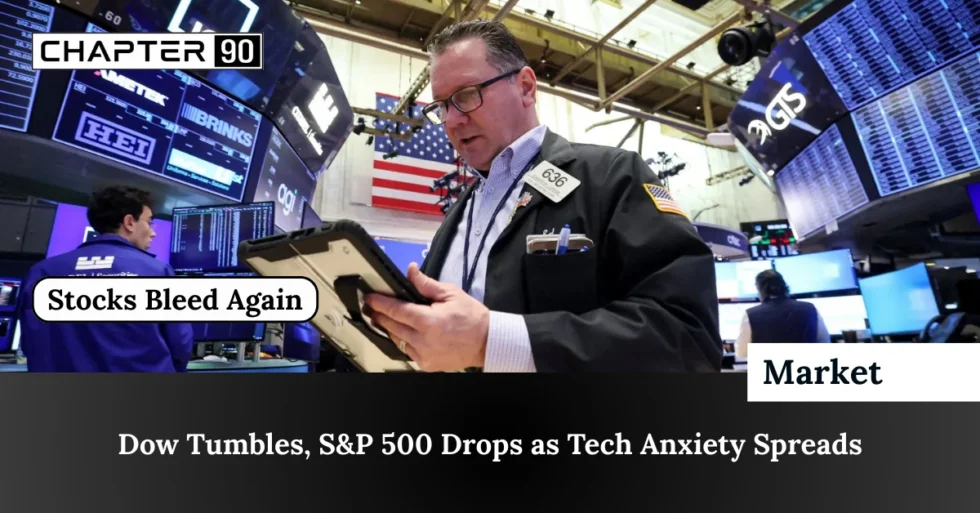
The Dow Jones Industrial Average dropped 530 points, or 1.1 percent. The S&P 500 also declined 1.1 percent, while the Nasdaq Composite led losses with a 1.5 percent fall.
Big Tech Under Pressure
Technology shares were hit hard, with most of the so-called Magnificent Seven stocks trading lower. Apple led the group’s decline, falling 3 percent. Meta Platforms and Amazon each lost about 2 percent as investors trimmed exposure to large-cap tech names.
Software Stocks Extend Decline
Software companies continued their recent slide amid fears that AI advancements could disrupt traditional business models. Palantir sank more than 6 percent, Oracle fell over 2 percent, and Salesforce dropped more than 1 percent. The iShares Expanded Tech Software Sector ETF slid 3 percent and now sits roughly 32 percent below its recent peak.
Cisco Drops on Weak Outlook
Cisco Systems plunged 11 percent after issuing weaker-than-expected guidance for the current quarter. The disappointing forecast added to pressure on technology and networking shares.
Rotation Into Cyclical Sectors
As money flowed out of software and high-growth tech, investors shifted toward more cyclical areas of the market. Walmart rose 3 percent, and Boeing gained 2 percent, reflecting renewed interest in consumer and industrial names.
Jobs Report Offers Mixed Signals
Markets had already closed lower in the prior session despite an initially positive reaction to a strong jobs report. The US economy added 130,000 jobs last month, well above forecasts, while the unemployment rate dipped to 4.3 percent from 4.4 percent.
Strong Payrolls Complicate Fed Outlook
Although solid hiring eased fears of a sharp slowdown, it also clouded expectations for Federal Reserve rate cuts. A resilient labor market, combined with lingering inflation concerns, could limit how quickly the Fed moves to ease policy.
Focus Shifts to Inflation Data
Investors are now looking ahead to Friday’s consumer price index report. Economists expect a 0.3 percent monthly rise in both headline and core inflation for January. The data could influence the Fed’s next policy steps.
Market Reaction Hinges on CPI Outcome
Analysts say a hotter-than-expected inflation reading might delay rate cut hopes further, though it would likely require a significantly stronger number to rattle markets deeply. On the other hand, softer data could spark renewed buying interest.
Jobless Claims Show Mixed Picture
Meanwhile, initial jobless claims for the week ended February 7 declined from the prior week but came in slightly above expectations, offering a mixed snapshot of labor market conditions.