


NVIDIA Halts Production of H200 Chips Amid Regulatory Challenges
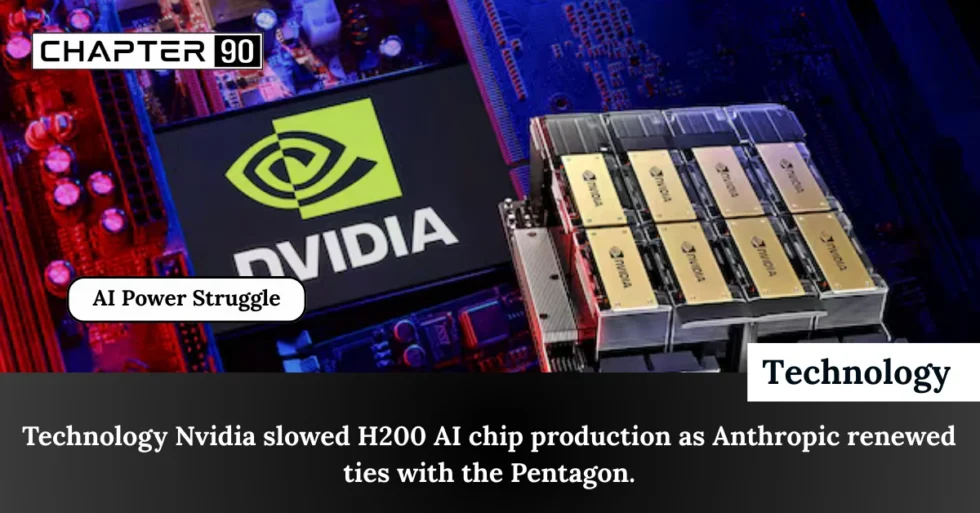
NVIDIA has reportedly stopped producing its H200 chips designed for the Chinese market, according to a report from the Financial Times. The move comes as tightening regulatory restrictions from both Washington and Beijing continue to limit technology exports and imports. These policies have made it increasingly difficult for US chipmakers to supply advanced artificial intelligence hardware to China, forcing companies like Nvidia to adjust their manufacturing and distribution strategies.
Shift Toward the Vera Rubin AI Platform
Following the production halt, Nvidia is expected to redirect its manufacturing capacity at Taiwan Semiconductor Manufacturing Company toward its next-generation Vera Rubin platform. The shift signals the company’s focus on more advanced AI infrastructure as global demand for high-performance computing continues to grow. Redirecting production may also help Nvidia maintain its leadership position in the rapidly evolving AI chip market.
Jensen Huang Signals Limits on Future AI Investments
NVIDIA CEO Jensen Huang recently suggested that the company’s massive investments in artificial intelligence startups could slow down after its current commitments. Speaking at an industry conference, Huang indicated that Nvidia plans to invest around $30 billion in OpenAI but is unlikely to reach the previously discussed $100 billion figure. He hinted that the company may wait for major AI startups to move toward public listings before making additional large investments.
Pentagon Partnerships and AI Industry Tensions
Investor attention has also focused on growing ties between AI companies and the US defense sector. OpenAI’s emerging partnership with the Pentagon has raised questions across the industry, especially after reports that Anthropic’s earlier negotiations with the Defense Department had collapsed. These developments have added another layer of uncertainty to the competitive AI landscape.
Anthropic Reopens Talks With the Defense Department
Despite earlier setbacks, Anthropic CEO Dario Amodei has reportedly resumed discussions with the US Defense Department about a potential military contract. According to recent reports, negotiations are once again underway to explore how the company’s AI technologies might be used in defense applications. The renewed dialogue highlights the increasing importance of artificial intelligence in national security and government operations.
Apple Unveils New Devices and Upgraded Chips
At the same time, the broader technology sector has seen a wave of product announcements from Apple. The company introduced several new devices, including a lower-cost MacBook Neo, an entry-level iPhone 17e, and updated iPad Air models. Apple also revealed refreshed MacBook Air and MacBook Pro laptops powered by its latest M5 chips, reinforcing its push to expand performance and accessibility across its product lineup.