



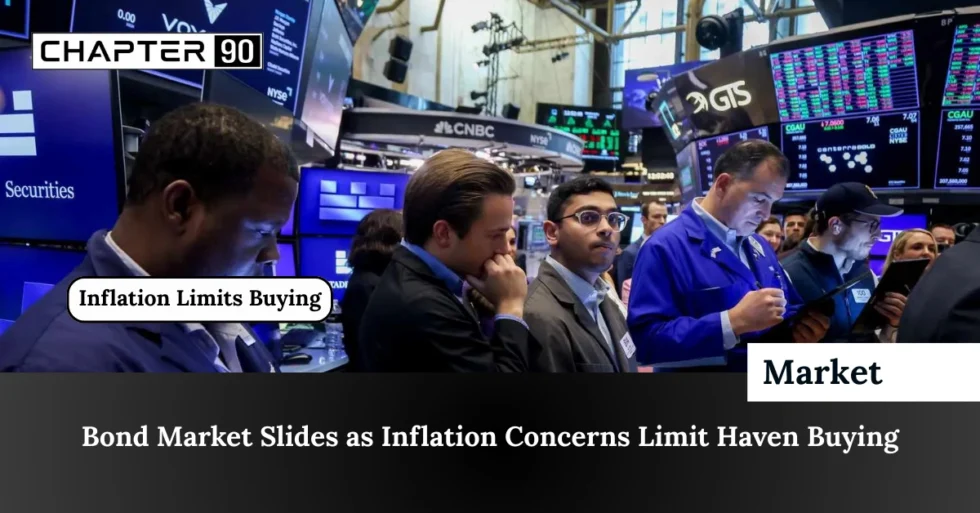
Treasury Market Slides as Middle East Tensions Escalate
US Treasuries moved lower after renewed conflict in the Middle East pushed oil prices sharply higher. The surge in energy costs reignited concerns that inflation could accelerate again, prompting traders to reduce expectations for aggressive interest rate cuts from the Federal Reserve.
Rising Yields Reflect Inflation Concerns
Bond yields climbed from multi-month lows as investors reassessed the risk of persistent inflation. The two-year Treasury yield jumped 10 basis points to 3.48%, while the 10-year yield advanced 11 basis points to 4.04%. The 30-year bond also edged higher, though gains were more modest. Futures markets now indicate traders expect roughly two quarter-point rate cuts by year end, with any additional easing potentially delayed until 2027.
Shift From Safe Haven to Inflation Focus
The latest selloff reverses last week’s rally, when the 10-year yield fell to its lowest level since April amid rising geopolitical uncertainty and stock market volatility tied to artificial intelligence concerns. Instead of flowing into government bonds for safety, investors are now prioritizing inflation risks over traditional flight to quality behavior.
Strategists Question Defensive Appeal
Market analysts suggest that the risk-reward balance for buying bonds as a defensive move is less compelling. Some believe rates markets had already factored in the possibility of escalating geopolitical tensions, limiting the upside for Treasuries during the latest crisis.
Manufacturing Data Adds Pressure
The decline in bonds intensified after new data showed US manufacturing activity expanded in February, while input costs surged. The combination of stronger activity and rising prices reinforced fears that inflationary pressures could persist.
Global Bond Markets React
European government bonds also declined, and inflation expectations climbed across global markets. Oil prices recorded their largest jump in four years as disruptions linked to the Strait of Hormuz fueled supply concerns.
Inflation Swaps Signal Rising Price Expectations
Short dated US inflation swap rates climbed alongside oil prices. The one-year contract tied to consumer prices rose 12 basis points to 2.62%, with similar moves seen in euro-denominated inflation swaps, signaling that investors are bracing for higher near term inflation.
Historical Evidence on Oil and Yields
Research from Deutsche Bank indicates that sharp increases in oil prices tend to drive bond yields significantly higher, often more so than geopolitical shocks alone. The analysis examined major global crises over recent decades, including Iraq’s invasion of Kuwait, the September 11 attacks, and Russia’s invasion of Ukraine, concluding that energy price spikes play a central role in shaping fixed income market reactions.