


Technological innovation is accelerating at an unprecedented pace, reshaping industries and redefining everyday life. Advances across artificial intelligence, biotechnology, quantum computing, and extended reality are no longer confined to research labs they are steadily integrating into real-world applications that promise greater efficiency, precision, and entirely new experiences.
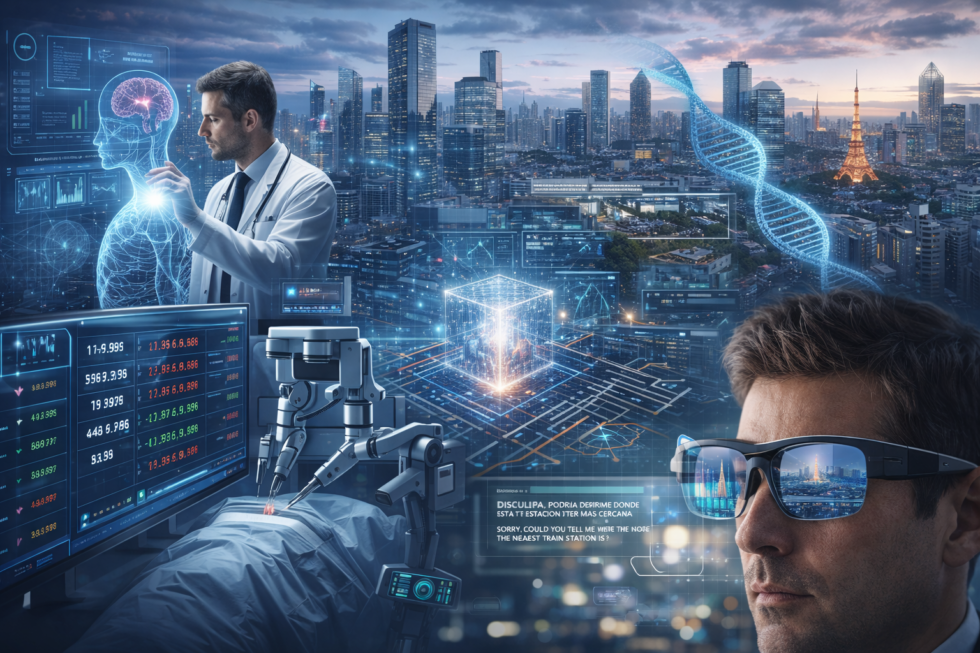
Artificial intelligence continues to lead this transformation. AI-powered health diagnostics are enabling faster and more accurate detection of diseases by analyzing medical images, patient data, and genetic information. These tools are helping healthcare professionals make informed decisions earlier, improving treatment outcomes while reducing strain on healthcare systems. In parallel, AI-driven cybersecurity solutions are becoming more sophisticated, identifying threats in real time and protecting sensitive digital infrastructure in an increasingly connected world.
Biotechnology is making equally remarkable strides. Robotic surgery systems enhanced with advanced sensors and AI guidance are improving surgical precision, reducing recovery times, and minimizing human error. Meanwhile, progress in 3D-printed organs is opening new possibilities for transplantation, potentially addressing organ shortages and transforming long-term patient care. These developments represent a shift toward personalized and regenerative medicine.
Extended reality technologies, including augmented and virtual reality, are also moving into daily use. Smart glasses equipped with real-time translation capabilities are breaking down language barriers, enabling seamless communication across cultures. AR and VR applications are expanding beyond gaming, influencing education, training, retail, and remote collaboration by creating immersive and interactive environments.
Quantum computing remains an emerging frontier, with the potential to solve complex problems far beyond the reach of traditional computers. Although still in early stages, progress in quantum research could revolutionize fields such as cryptography, drug discovery, and climate modeling, unlocking solutions previously considered impossible.
Transportation and infrastructure innovation is also gaining momentum. Concepts like hyperloop transport aim to drastically reduce travel times while improving energy efficiency. Combined with smart city technologies, these advancements signal a future where mobility is faster, cleaner, and more connected.
In conclusion, modern technological inventions are converging toward a common goal: seamless integration into daily life. By enhancing efficiency, expanding human capability, and creating new experiences, these innovations are shaping a future that blends intelligence, connectivity, and sustainability. As adoption accelerates, the way people live, work, and interact with the world is set to undergo a profound transformation.