


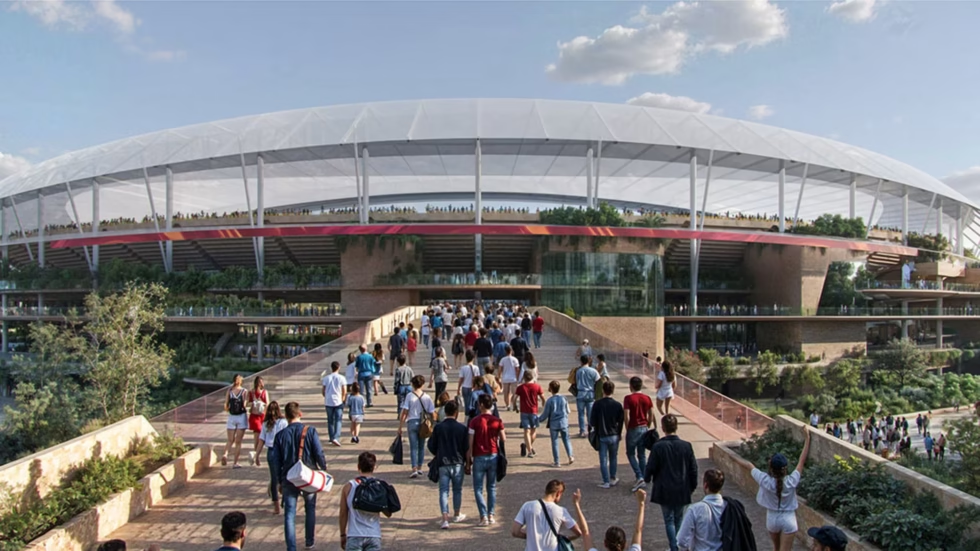
Plans for a new Olympic stadium in Brisbane ahead of the 2032 Games are increasingly being viewed not just as a sporting project, but as a major business and financial undertaking with long-term economic consequences. The proposed development at Victoria Park has brought renewed attention to how large-scale infrastructure projects involve billions of dollars, complex financial trade-offs, and political risk.
At the heart of the debate is money. Building a world-class stadium requires substantial public investment, with costs expected to run into the billions. Governments must weigh whether the projected economic returns justify the spending, particularly at a time when budgets are under pressure from rising costs, inflation, and competing public priorities such as healthcare and housing.
Supporters argue that the stadium represents a long-term business investment rather than a short-term expense. Large infrastructure projects can stimulate economic activity through construction contracts, job creation, and increased demand for local services. In addition, global events like the Olympics often attract tourism, sponsorship deals, and international exposure that can benefit the wider economy for years.
However, critics warn that stadium projects frequently exceed initial budgets, placing taxpayers at financial risk. Cost overruns, delays, and maintenance expenses can reduce the return on investment, turning ambitious developments into long-term financial burdens. These concerns highlight the importance of strong financial oversight and transparent cost management.
The project also has implications for private sector involvement. Construction firms, engineering companies, hospitality businesses, and commercial partners stand to gain from contracts and future revenue opportunities. At the same time, uncertainty around final plans and funding models can affect investor confidence and business planning.
Beyond the stadium itself, the surrounding development plays a critical role in determining economic success. Transport upgrades, commercial spaces, and urban regeneration projects linked to the stadium could unlock additional revenue streams and increase land value. Without careful planning, however, these opportunities may fail to materialize.
From a broader business perspective, the stadium debate reflects how governments use major events to justify large capital spending. The challenge lies in ensuring that financial decisions are driven by sustainable economic outcomes rather than short-term political pressure.
In conclusion, Brisbane’s Olympic stadium proposal is as much a business and money story as it is a sporting one. The decisions made now will influence public finances, private investment, and economic confidence for decades. Whether the project delivers lasting financial value will depend on disciplined spending, clear strategy, and realistic expectations around economic returns.