



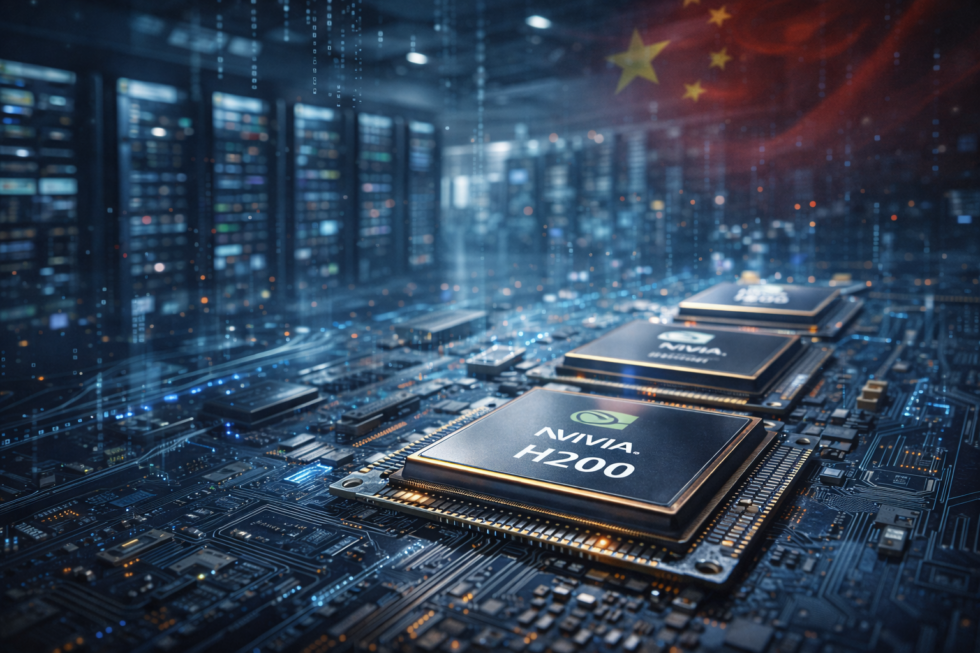
China is preparing to approve purchases of Nvidia’s advanced H200 artificial intelligence chips as early as this quarter, a move that highlights the complex balance between technology demand, global competition, and geopolitical pressure. The decision signals a calculated step by Beijing to support domestic AI development while navigating ongoing tensions surrounding global semiconductor controls.
The H200 chip represents a powerful tool for artificial intelligence workloads, offering enhanced performance for data centers, cloud computing, and advanced machine-learning applications. For China’s technology companies, access to high-performance AI hardware is critical to maintaining competitiveness in fields such as automation, research, and large-scale data analysis. Delays or restrictions on such technology can significantly slow innovation and economic growth.
From a business perspective, the approval could unlock substantial spending. AI chips are high-value products, and large-scale purchases involve billions of dollars in investment from Chinese firms and state-backed entities. This spending reflects the growing financial commitment China is making to artificial intelligence as a pillar of future economic expansion.
For Nvidia, potential approval represents a major commercial opportunity. China remains one of the world’s largest technology markets, and access to it has direct implications for revenue growth and global market share. At the same time, Nvidia must carefully navigate regulatory compliance and political scrutiny while balancing relationships across competing global powers.
The move also carries strategic implications. While China continues to invest heavily in domestic chip development, short-term reliance on foreign technology remains unavoidable. Approving H200 purchases suggests a pragmatic approach—prioritizing immediate performance gains while longer-term self-sufficiency goals remain in progress.
Geopolitically, the development underscores how technology has become a central battleground in global power competition. Semiconductor access is no longer just a commercial issue; it is closely tied to national security, economic influence, and strategic leverage. Each approval or restriction sends signals far beyond the tech industry.
Market reaction is likely to focus on what this means for global supply chains and future policy direction. If approvals move forward smoothly, they may ease some uncertainty in the semiconductor sector. However, the broader environment remains fragile, with technology trade increasingly shaped by politics rather than pure market forces.
In conclusion, China’s potential approval of Nvidia H200 chip purchases reflects a strategic calculation driven by economic necessity, technological ambition, and geopolitical reality. The decision highlights how money, innovation, and global power are increasingly interconnected in shaping the future of the tech industry.