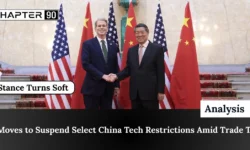




A growing number of senior business leaders are openly signaling that a tougher institutional stance toward former U.S. President Donald Trump is proving beneficial for global business sentiment. The shift comes at a time when political unpredictability and aggressive trade rhetoric had unsettled markets and raised concerns across international boardrooms.
A prominent European banking executive recently pointed out that resistance to erratic policymaking is not a threat to economic growth, but rather a stabilizing force. For months, businesses were forced to operate under the shadow of potential tariff escalations, making long-term planning difficult and discouraging investment. That pressure eased noticeably after a reversal on previously proposed trade measures.
The tariff rollback was widely interpreted as a return to economic pragmatism. Corporate leaders responded positively, viewing the move as a sign that policy decisions may once again prioritize market stability over political signaling. This change has reduced uncertainty around supply chains, pricing strategies, and cross-border operations — areas that had been under strain during periods of heightened trade tension.
From an analytical perspective, the reaction reveals a broader shift in corporate thinking. Businesses are not opposing strong political leadership, but they are increasingly vocal about the need for consistency, institutional balance, and clear economic rules. A firmer stance against disruptive policies, particularly those associated with Trump-era trade threats, is being seen as a necessary correction rather than confrontation.
Market behavior has reflected this sentiment, with calmer trading patterns and improved confidence indicators. While geopolitical risks remain, executives appear reassured by signs that abrupt policy swings may be less likely in the near term.
Ultimately, this episode reinforces a key lesson for policymakers and markets alike: stability, restraint, and predictable trade frameworks are essential ingredients for sustaining global business confidence.