


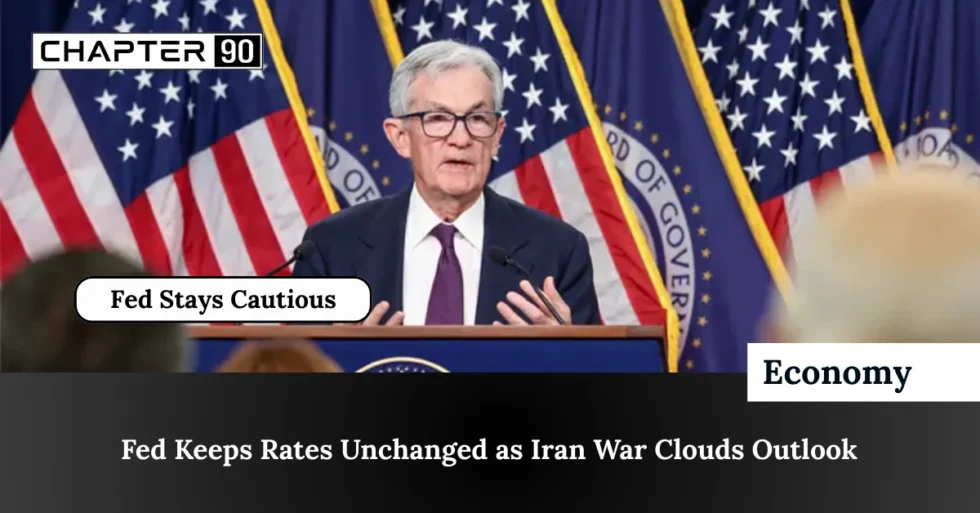
US Federal Reserve Holds Rates Steady as Iran War Keeps Markets Uncertain
The US Federal Reserve left interest rates unchanged as policymakers weighed rising oil prices, inflation risk, and the wider economic uncertainty linked to the Iran war. The central bank kept its benchmark rate in the 3.5% to 3.75% range and said inflation remains somewhat elevated, while the outlook has become harder to read because of geopolitical pressure and energy market volatility.
Fed Chooses Caution Over a Fresh Policy Move
The decision shows the Fed is still in wait and watch mode. Officials did not signal an urgent change in direction, even though markets were looking closely for clues on rate cuts. The latest policy statement made only limited changes, which suggests the Fed wants more clarity before shifting course again.
Iran War Adds New Inflation Pressure
The Iran war has complicated the Fed’s job because higher oil prices can quickly feed into inflation. When energy costs rise, they can push up transport bills, business expenses, and consumer prices across the economy. That makes it harder for policymakers to ease rates, even if growth starts to slow.
Markets Are Rethinking Rate Cut Hopes
Investors have become less confident that rate cuts will come soon. Reuters reported that the Fed still points to one possible cut this year, but markets are increasingly cautious because oil driven inflation could keep pressure on the central bank for longer than expected. That change in expectations has already affected stocks and bond yields.
The Fed Is Balancing Growth and Prices
The central bank is trying to manage two risks at once. On one side, inflation remains above target. On the other, the labor market has shown some signs of weakness, with low job gains and little improvement in unemployment. That leaves the Fed in a narrow space where cutting too early could worsen inflation, but waiting too long could hurt growth.
Oil Prices Remain the Biggest Outside Threat
The biggest outside risk for policy is still energy. If oil prices stay high because of disruption linked to the Iran conflict, inflation could remain sticky for longer. That would make future policy meetings more difficult and could force markets to adjust again to a slower path toward lower rates.
Wall Street Now Faces a More Uncertain Outlook
The Fed decision did not fully calm investors. Stocks fell after the announcement and bond yields moved higher as traders absorbed the message that policy may stay restrictive for longer. That leaves Wall Street facing a market shaped by war risk, expensive energy, and fewer near term hopes for easier money.
The Next Data Cycle Matters More Than Ever
The next inflation reports, labor market numbers, and moves in oil prices will likely matter more than the statement itself. For now, the Fed has chosen stability over action. But if the Iran war keeps energy prices high, the path ahead for interest rates could become even more difficult for both policymakers and investors.