



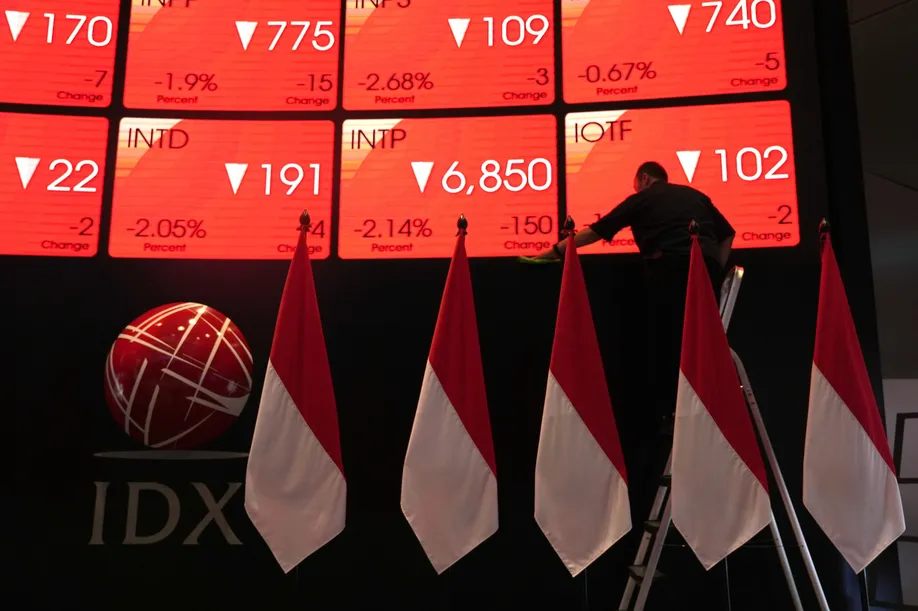
Indonesian equities have come under notable pressure as foreign investors record their largest sell-off in months, signaling a shift in risk appetite toward emerging markets. The scale of the outflows suggests growing caution rather than panic, driven by a mix of global and domestic considerations that are reshaping capital flows.
From an analysis standpoint, the selling reflects broader sensitivity to global monetary conditions. As interest rate expectations remain uncertain and global liquidity tightens, international investors tend to reduce exposure to higher-risk markets first. Emerging equities like Indonesia often feel this impact early, especially when safer assets begin offering more attractive returns.
Currency dynamics also play a role. When foreign investors exit equity positions, pressure typically extends to the local currency, raising concerns about imported inflation and policy response. Even modest currency weakness can amplify equity outflows as investors seek to limit downside risk.
Domestically, questions around earnings momentum and valuation sustainability have added to caution. After periods of strong performance, markets often become vulnerable to profit-taking once global sentiment shifts. This does not necessarily signal deteriorating fundamentals, but rather a reassessment of near-term upside versus downside risk.
Sector-level exposure further complicates the picture. Financials and resource-linked stocks, which attract significant foreign participation, tend to experience sharper moves during periods of capital rotation. As global investors rebalance portfolios, these sectors often absorb the bulk of selling pressure.
Importantly, foreign selling does not automatically imply long-term weakness. Historically, such phases have sometimes created entry points for domestic investors and longer-term funds. The key variable will be policy stability and whether economic growth remains resilient enough to absorb external shocks.
For now, the market appears to be adjusting to a more cautious global environment. The recent outflows highlight how sensitive emerging markets remain to shifts in global sentiment and how quickly capital can move when risk perception changes.