


Pressure for a ceasefire raises economic concerns.
There is renewed pressure on the fragile ceasefire between the United States and Iran as regional tensions rise. The continuing military activity in Lebanon and uncertainty surrounding key agreements have raised concerns about the stability of the global economy.
Global Oil Supply Hit by Hormuz Disruption
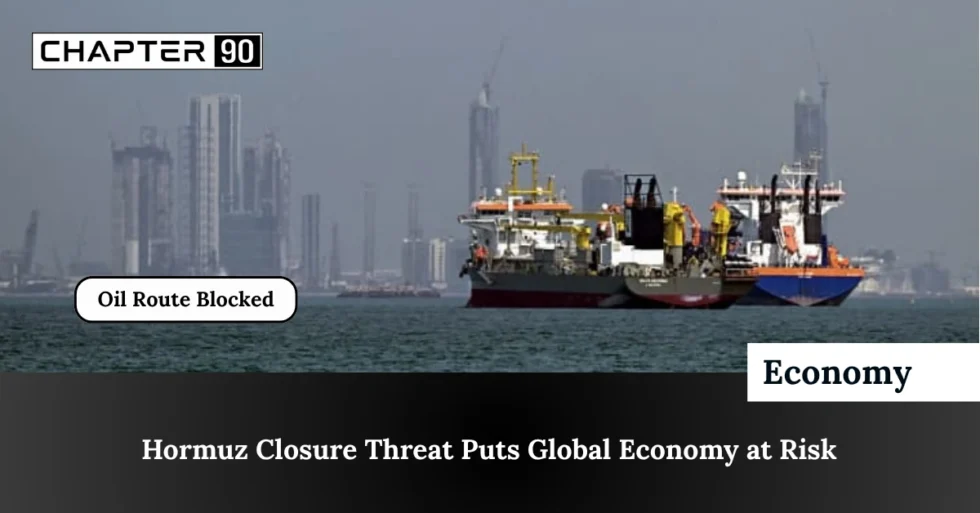
One of the biggest risks to the global economy is the Strait of Hormuz, a vital route for energy flows. In the area, Iran has restricted ship traffic and reported possible security threats affecting vessel movement.
This route carries around 20 percent of the world’s oil supply, so any disruption would be a major shock to markets worldwide.
The price of oil is rising and trade is slowing.
Supply concerns and market uncertainty have led to an increase in oil prices near $100 per barrel. Furthermore, shipping disruptions have caused hundreds of vessels to be delayed, affecting global logistics and trade.
Multiple industries are experiencing higher transport costs, higher insurance premiums, and longer delivery times due to the shipping slowdown.
An expansion of the economic impact
The disruption not only affects energy markets. Manufacturing, trade flows, and commodity prices are all being affected by supply chain delays. Several analysts warn that prolonged instability could lead to a rise in inflation and a slowdown in economic growth.
It has already seen major price spikes in the liquefied natural gas sector, with some reports showing an increase of over 80 percent.
Volatile and uncertain markets
Financial markets are showing a cautious reaction. Global geopolitical risks have led investors to seek out safer assets amid mixed stock performance.
In the absence of a ceasefire, volatility remains high.
The outlook depends on Hormuz stability.
Hormuz’s return to normality will determine the direction of the global economy.Disruptions can prolong the energy crisis, while stability can ease market conditions.