


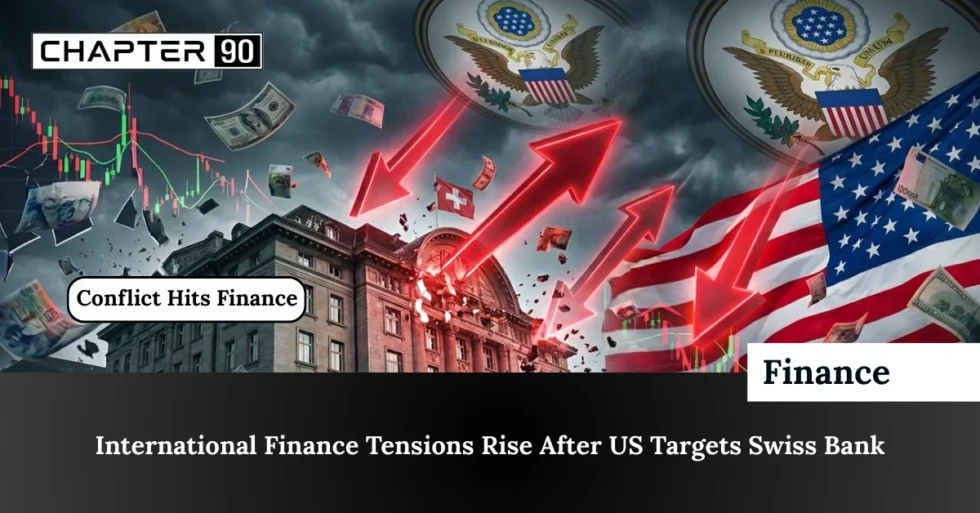
Finance Crackdown: Swiss Bank Faces U.S. Dollar Ban Over Money Laundering Allegations
A little-known Swiss institution, MBaer Merchant Bank AG, is facing the potential loss of access to the U.S. dollar system. On February 26, the U.S. Treasury Department’s Financial Crimes Enforcement Network (FinCEN) issued a notice of proposed rulemaking to classify the bank as a “primary money laundering concern.” Treasury officials allege the bank has provided financial services to illicit networks connected to Russia and Iran and has facilitated more than $100 million in suspicious transactions since 2019. If the rule is finalized, U.S. financial institutions would be barred from maintaining correspondent banking relationships with the Swiss lender.
Broader Sanctions Strategy Against U.S. Adversaries
The proposed action forms part of Washington’s wider strategy to disrupt financial channels supporting geopolitical adversaries. Just one day earlier, the Treasury rolled out a sanctions package targeting Iran’s shadow oil fleet and illicit weapons procurement networks. The move against MBaer signals intensified enforcement aimed at cutting off financial lifelines tied to Russia, Iran, and other sanctioned regimes.
Origins Linked to Venezuelan Corruption
MBaer was established in 2018, at a time when U.S. authorities were increasing scrutiny of corruption and money laundering linked to Venezuela’s state-owned oil company, PdVSA. Reports indicate that a former vice chairperson of the bank helped process payments connected to her husband, who was later sanctioned in 2021 by the Treasury’s Office of Foreign Assets Control (OFAC) for involvement in a PdVSA sanctions-evasion scheme. FinCEN also alleges the bank maintained accounts for individuals tied to a multi-billion-dollar cryptocurrency scheme associated with PdVSA, along with shell entities connected to Venezuelan public corruption.
Ties to Russian Oligarchs and Ukrainian Networks
According to FinCEN findings, MBaer reportedly relied heavily on wealthy Russian clients. Are including individuals subject to Western sanctions. The agency believes bank employees may have managed trust structures and front companies. Linked to Sergey Kurchenko, a pro-Russian Ukrainian oligarch sanctioned. By the United States. The bank is also accused of handling accounts controlled by Viktor Medvedchuk, a Kremlin-aligned politician sanctioned by the U.S., European Union, and Switzerland. In addition, authorities suspect the bank facilitated payments for firms involved in the alleged theft of Ukrainian grain and procurement of military equipment for Russia.
See Why U.S. Equipment Finance Is Starting Strong
Iranian Oil and Sanctions Evasion Activity
Beyond Russia and Venezuela, MBaer is alleged to have processed more than. $37 Million connected to oil smuggling and money laundering operations benefiting Iran’s Islamic Revolutionary Guard Corps. The bank also appears to have handled transactions for a company associated with an Iranian shadow fleet tanker, further raising concerns over sanctions compliance.
Congressional Oversight and Referral Gaps
Lawmakers are being urged to strengthen oversight mechanisms to ensure earlier detection of foreign banks implicated in sanctions evasion. Some policymakers suggest mandatory referrals to FinCEN when foreign financial institutions surface in U.S. corruption or money laundering prosecutions. Such measures could allow authorities to identify high-risk institutions before they expand their operations within the U.S. financial system.
Compliance Burdens and Regulatory Blind Spots
FinCEN’s proposal also highlighted structural challenges in enforcement. Because there is no centralized registry of foreign institutions holding U.S. correspondent accounts. The regulators had to reconstruct the list of affected entities using financial filings, suspicious activity reports. And Federal Reserve account records. This lack of comprehensive data complicates oversight efforts.
Proposed Expansion of Reporting Requirements
Currently, U.S. banks must gather beneficial ownership details for foreign institutions with correspondent accounts. The Policymakers are considering extending this requirement to cover broker-dealers, mutual funds, and other non-bank financial entities accessing the U.S. financial system. Requiring semiannual reporting to FinCEN could provide greater transparency regarding ownership structures and improve the Treasury’s ability to identify and act against high-risk institutions before they operate for years in support of sanctioned actors.