



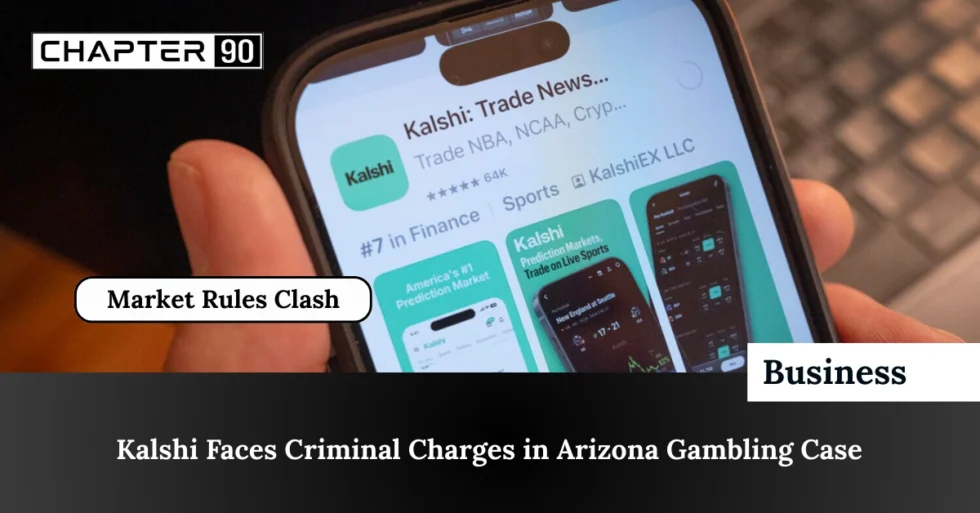
Legal Battle Begins as Kalshi Faces Gambling Charges in Arizona
A major legal challenge has opened for Kalshi after Arizona filed criminal charges accusing the prediction market platform of operating an illegal gambling business in the state. The case adds new pressure to a company already facing legal fights over whether its event contracts should be treated as federally regulated financial products or state-level gambling activity. That makes this more than a courtroom dispute. It is now a serious regulatory test for the future of prediction markets in the United States.
Arizona Raises the Stakes for Prediction Markets
The Arizona action stands out because it is criminal, not just civil or administrative. State officials allege the platform unlawfully allowed people in Arizona to place bets on election outcomes, which the state treats as gambling under its laws. That raises the pressure on the company because a criminal case can create more reputational and regulatory damage than the cease and desist battles seen elsewhere.
See How Iran Oil Disruptions Are Impacting the Global Economy
The Core Fight Is About Regulation
The bigger issue is who gets to control this market. Kalshi argues that its contracts fall under federal oversight through the Commodity Futures Trading Commission, while several states say these products operate too much like sports betting or political wagering to escape local gambling laws. Courts and regulators have already split on related disputes in other states, which shows how unsettled the legal ground still is.
This Has Become a Business and Compliance Story
For the financial and technology sectors, the case matters because prediction markets have been trying to position themselves as part of the regulated fintech space rather than the gambling industry. A criminal filing in Arizona weakens that message and could make banks, partners, payment providers, and investors more cautious. It also raises the risk that more states could try the same approach if Arizona’s move gains traction. This last point is an inference based on the expanding state-by-state legal conflict around prediction markets.
Other States Have Already Been Fighting Similar Battles
The Arizona case does not stand alone. Nevada, Massachusetts, Tennessee, and Utah have all been involved in major disputes over prediction market platforms, with arguments focused on sports contracts, election contracts, and whether federal approval blocks state enforcement. Some courts have sided more with states, while others have temporarily restrained local action, which has left the market facing a patchwork legal map.
The Outcome Could Shape the Industry
If Arizona’s case moves forward aggressively, it could influence how other states approach these platforms and whether prediction markets keep expanding as a fintech product category. The broader question is no longer only about one company. It is about whether event-based trading can keep growing in the US without being pulled back under traditional gambling rules. That is why this case matters far beyond one state filing. This final point is an editorial inference based on the national pattern of legal challenges and regulator involvement.