


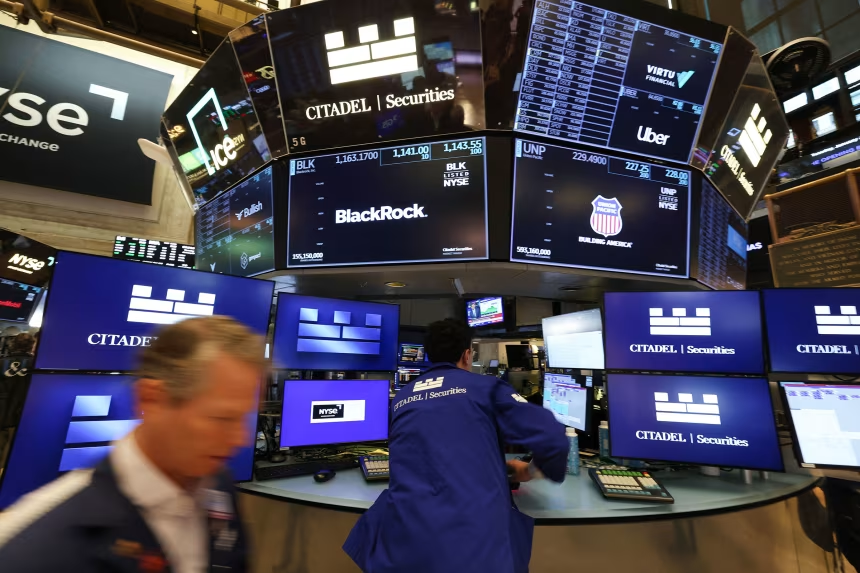
Financial markets often move less on action and more on tone. When political language shifts from confrontation to restraint, capital responds almost immediately. That dynamic was clearly visible as US equities rebounded sharply, reflecting a collective sense of relief rather than sudden optimism.
From a human-behaviour perspective, investors are highly sensitive to uncertainty created by policy rhetoric. Tariffs, trade disputes, and geopolitical escalation don’t just affect balance sheets they disrupt expectations. When the possibility of disruption fades, even temporarily, markets recalibrate fast.
This rally wasn’t driven by new data or earnings surprises. It was driven by reduced perceived risk. When leaders signal flexibility instead of confrontation, investors reassess worst-case scenarios. Positions that were trimmed defensively are rebuilt. Cash that had been sitting on the sidelines begins to re-enter risk assets.
Markets operate on probability, not promises. A softer political tone doesn’t guarantee stability, but it lowers the immediate likelihood of shock. For portfolio managers, that shift alone is enough to justify re-engagement. Humans instinctively respond to reduced threat by loosening their defensive posture.
Bond markets reflected the same psychology. When fears of trade-driven inflation or economic disruption recede, demand for extreme safety eases. Investors rebalance rather than retreat. This behavior isn’t about confidence returning fully it’s about fear stepping back.
There’s also an exhaustion factor. Markets have spent months digesting inflation, tightening financial conditions, and geopolitical tension. Each additional risk headline carries diminishing shock value, but relief still lands powerfully. When pressure finally releases, even modest reassurance can trigger strong reactions.
Professionally, this move highlights how markets distinguish between structural risk and rhetorical risk. Structural risk requires data to change. Rhetorical risk only requires language to shift. When rhetoric softens, markets react first and ask questions later.
That doesn’t mean uncertainty has vanished. Investors remain alert. Volatility doesn’t disappear simply because tensions ease. But the willingness to take exposure increases when downside narratives weaken.
What’s notable is how quickly sentiment turned. That speed reflects positioning rather than conviction. Many investors were already cautious. When the threat receded, they didn’t need persuasion they needed permission.
Ultimately, this rally is a reminder that markets are emotional systems guided by logic, not purely logical systems immune to emotion. Tone matters. Words shape expectations. Expectations drive capital.
For now, investors are responding to breathing room not certainty. Whether this relief holds will depend on consistency. Markets can forgive tension. What they struggle with is unpredictability.
In the short term, reduced friction has allowed confidence to resurface. And in markets, confidence doesn’t need to be permanent to be powerful it only needs to be believable long enough to move prices.