


US and Iran Set to Resume Nuclear Talks in Oman Amid Tensions
The United States and Iran have agreed to hold nuclear talks in Oman on Friday, following days of uncertainty and rising tensions. The meeting comes as President Donald Trump issued a direct warning to Iran’s Supreme Leader, Ayatollah Ali Khamenei.
Talks Set to Begin in Muscat
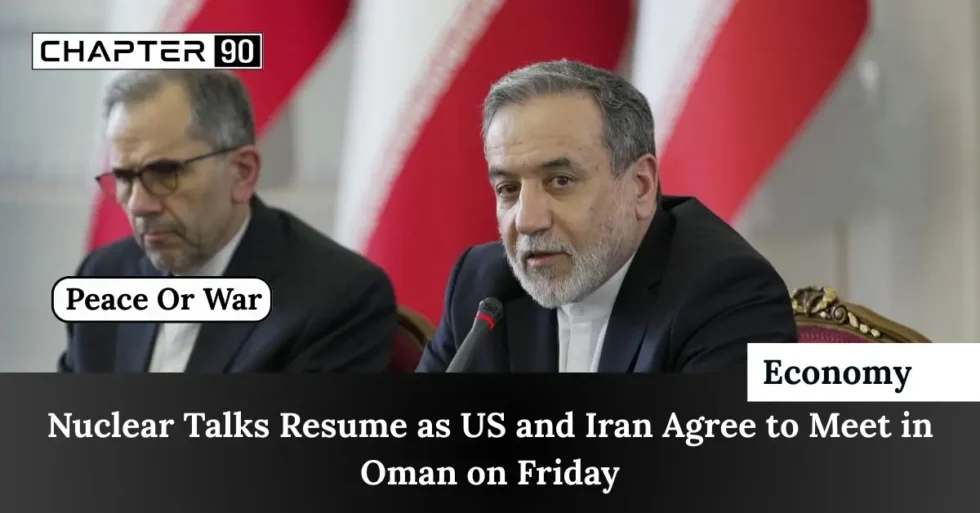
Iranian Foreign Minister Abbas Araghchi said the talks will begin at 10:00 local time in Muscat, which is 06:00 GMT. US officials later confirmed the location and timing.
Earlier in the week, the talks appeared at risk after disagreements over where the meeting should take place and what issues would be discussed.
Trump Issues Warning to Iran’s Leadership
President Trump has increased the US military presence in the region and warned that military action remains possible if Iran refuses to reach a nuclear deal or continues its crackdown on protesters.
When asked by NBC News if Khamenei should be concerned, Trump said he should be very worried. He added that negotiations were already underway.
Iran Warns of Regional Conflict
Khamenei responded on Sunday by warning that any attack on Iran would lead to a wider regional war. Despite the public threats, diplomats said talks between Tehran and Washington were never officially cancelled, though they were unstable earlier in the week.
Regional Pressure Helped Restart Talks
According to an Arab diplomat cited by CBS News, negotiations were back on track by Wednesday afternoon. Several Arab and Muslim leaders reportedly urged the Trump administration not to walk away from the talks.
Three US officials confirmed an Axios report stating that the administration agreed to continue discussions out of respect for regional allies, though doubts remain about whether the talks will succeed.
Confusion Over Iran’s Participation
US Secretary of State Marco Rubio said special envoy Steve Witkoff had been preparing to meet Iranian officials in Turkey, along with regional representatives. That plan changed after US officials received mixed signals about Iran’s involvement.
US Pushes for Broader Negotiations
Rubio stressed that any meaningful agreement must go beyond Iran’s nuclear program alone. He said talks must also cover Iran’s missile development, its support for armed groups in the region, and its treatment of its own citizens.
Iran Signals Willingness on Nuclear Limits
In an interview with CNN, Araghchi said Iran agrees with Trump’s demand for no nuclear weapons. He said a deal is possible if sanctions are lifted in return.
Iran continues to insist that its nuclear program is peaceful and denies seeking atomic weapons.
Trump Cites Past Military Strikes
Trump claimed that Iran was close to developing a nuclear weapon before the US carried out air and missile strikes on three major Iranian nuclear sites during last June’s twelve-day conflict between Israel and Iran.
Israeli forces also targeted Iranian nuclear facilities, scientists, military leaders, and missile stockpiles during the conflict.
Claims of Ongoing Nuclear Activity
Trump said the strikes destroyed Iran’s uranium enrichment capability, but warned that Iran may be attempting to build a new facility elsewhere. He said the US warned Iran against restarting its program.
Protests and Deadly Crackdown in Iran
Trump also expressed support for Iranian protesters after last month’s violent crackdown by security forces. The unrest began over the collapse of Iran’s currency and rising living costs, then grew into wider calls for political change.
Death Toll Remains Unclear
The true scale of the violence remains uncertain due to a government- imposed internet shutdown that began in early January. A US-based rights group reported thousands of deaths, including children and bystanders, and is investigating additional cases.
Iranian authorities acknowledged more than three thousand deaths but said most were security personnel or civilians killed by what they described as rioters.
Iranian Leadership Rejects Protest Claims
Khamenei dismissed the protests as foreign-driven unrest, blaming the United States and Israel for fueling the violence.