



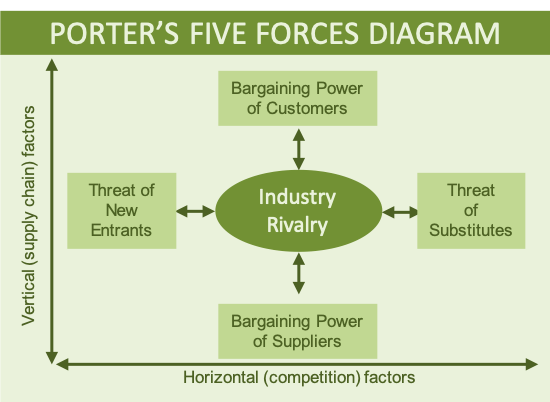
Porter’s Five Forces model is one of the most widely used frameworks in business strategy, helping organizations understand the competitive dynamics of an industry. Developed by Harvard Business School professor Michael Porter, the model examines five key forces that shape competition and influence profitability. By analyzing these forces, businesses can make more informed strategic decisions and identify opportunities for long-term success.
The first force is competitive rivalry, which measures the intensity of competition among existing firms in an industry. High rivalry often leads to price wars, increased marketing costs, and pressure on profit margins. Industries with many competitors offering similar products — such as airlines or fast food — typically experience strong rivalry. Understanding this force helps companies assess how aggressively they must compete.
The second force is the threat of new entrants. When barriers to entry are low, new competitors can easily enter the market, increasing competition and reducing profitability. Barriers may include high startup costs, strong brand loyalty, regulatory requirements, or access to distribution channels. Companies in industries with strong barriers are better protected from new competition.
The third force is the bargaining power of suppliers. Suppliers have more power when there are few alternatives or when their inputs are highly specialized. Strong supplier power can increase production costs and reduce a firm’s ability to negotiate favorable terms. Businesses can reduce this risk by diversifying suppliers or developing alternative sources.
The fourth force is the bargaining power of buyers. Buyers gain power when they have many choices, can easily switch providers, or purchase in large volumes. High buyer power often leads to price pressure and demands for better quality or service. Companies can counter this by differentiating their products or building strong customer relationships.
The final force is the threat of substitutes. Substitute products or services limit how much companies can charge by offering customers alternative solutions. For example, streaming services pose a substitute threat to traditional cable television. The greater the availability of substitutes, the higher the competitive pressure.
Together, these five forces provide a structured way to analyze industry attractiveness and competitive positioning. While the model does not replace detailed market research, it offers a valuable starting point for strategic planning. When used effectively, Porter’s Five Forces helps businesses anticipate challenges, strengthen competitive advantages, and make smarter strategic choices in a constantly evolving marketplace.