

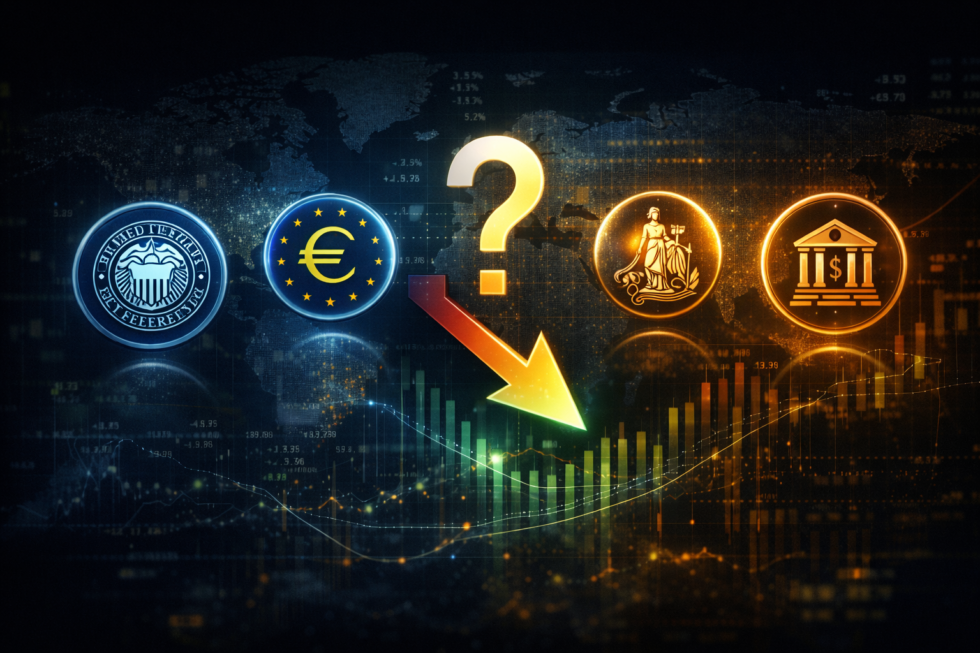
Interest rates don’t move only because of data. They move because of fear, patience, confidence, and timing. Right now, the world is sitting in a strange pause. Borrowing is expensive, inflation has cooled but not disappeared, and everyone is waiting for the same thing “The first cut“.
The question isn’t just who cuts first, but who feels the pressure first.
Some policymakers are under pressure from households. Mortgages are expensive, businesses are delaying expansion, and consumers are thinking twice before spending. When this pressure builds, leaders start worrying less about inflation headlines and more about everyday frustration. That’s usually when the conversation shifts from “holding firm” to “easing soon.”
Others are still comfortable waiting. Their economies are holding up, jobs are still there, and spending hasn’t collapsed. Cutting too early feels risky. Once rates come down, reversing course is painful. So patience becomes a strategy even if it annoys markets.
Then there are places where the pain arrived early. Borrowing slowed faster, growth cooled sooner, and pressure forced action. In these cases, rate cuts are less about confidence and more about survival. Waiting too long could cause deeper damage, so easing becomes the safer option.
Markets react to emotion before policy. When people believe cuts are coming, behavior changes. Businesses start planning again. Investors take risks. Consumers loosen up slightly. This is why words matter as much as actions. A single hint can move billions.
Human psychology plays a massive role. Nobody wants to be the first and get blamed if inflation returns. Nobody wants to be the last and watch growth slip away. So everyone watches everyone else. It becomes a quiet standoff. Who blinks first?
The truth is, this rate cycle won’t turn all at once. Some will move earlier out of necessity. Others will follow when confidence allows. And a few will wait until the pressure becomes impossible to ignore.
In the end, interest rate cuts are not just economic decisions. They are human decisions made under uncertainty. Fear of being wrong, desire to protect credibility, and pressure from everyday life all collide at the same moment. When the first cut finally arrives, it won’t just mark a policy shift . It will signal that patience has finally run out.