


Trump Urges Republicans to Push for National Control of Elections
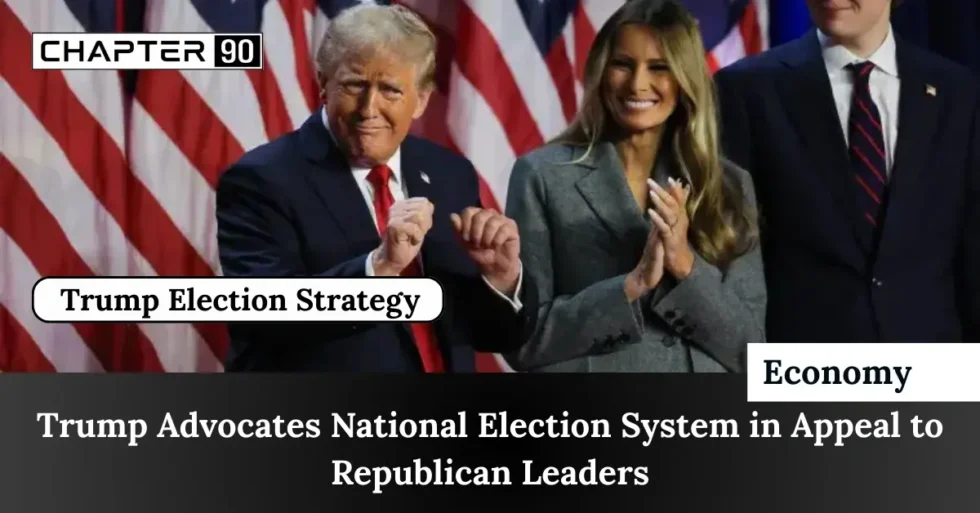
President Donald Trump has called on Republicans to move toward what he described as “nationalizing” the voting process, as his administration seeks major changes to election procedures ahead of this year’s crucial midterm elections. His remarks were made during an interview that aired on Monday.
Call for Federal Takeover of Voting Systems
Speaking on a podcast hosted by former FBI deputy director Dan Bongino. Trump suggested that Republicans should take control of election administration in multiple states. He argued that federal oversight should replace state-level authority in what he claimed were problematic jurisdictions.
According to Trump, national control of elections would address what he characterized as widespread irregularities in vote counting. It particularly in states he insists were mishandled during past elections.
Comments Follow FBI Search of Georgia Elections Office
Trump’s statements came shortly after the FBI searched an elections office in Fulton County, Georgia, an area central to his long-standing claims that the 2020 presidential election was improperly decided. Authorities said the search was connected to a Justice Department effort to obtain election-related records as part of a broader inquiry into alleged voter fraud.
Trump pointed to the Georgia investigation as proof that new information could emerge. It claiming court-authorized access to ballots would reveal concerning findings.
Intelligence Chief Details Trump’s Direct Involvement
Director of National Intelligence Tulsi Gabbard stated that Trump personally instructed her to travel to Atlanta in connection with the Fulton County search. Sources familiar with the matter said Trump also spoke directly with FBI agents involved in the operation. It offering what was described as a brief motivational call.
The interaction highlighted the president’s close attention to the investigation and his continued interest in election-related probes.
Push to Reshape Election Rules Nationwide
Although elections in the U.S. are traditionally managed by state and local authorities, Trump has repeatedly attempted to expand the federal government’s role. Last year, he signed an executive order seeking to require proof of U.S. citizenship for voter registration and to block states from counting mail-in ballots received after Election Day.
While parts of the order have been halted by federal courts. Trump has continued to argue for sweeping changes. It including efforts to restrict mail-in voting and eliminate voting machine proposals he ultimately did not formalize through executive action.
Redistricting Efforts and Legal Actions Intensify
In addition to election rule changes. Trump launched an uncommon mid-decade redistricting initiative aimed at boosting Republican prospects in the House of Representatives during the upcoming midterms.
The Justice Department has also taken legal action against more than two dozen states, seeking access to full voter rolls. Officials have claimed undocumented immigrants are participating in elections, though no independent evidence has substantiated those allegations.
Democratic Officials Prepare for Federal Intervention
In response, Democratic election officials across several states have begun preparing for possible federal involvement in the midterms. A development that helps Highlight Rising Risk to election administration and voter confidence. Minnesota Secretary of State Steve Simon said election administrators are discussing safeguards. It including protecting voters from federal law enforcement presence at polling locations and managing requests for sensitive voter data.
Simon acknowledged that planning for such scenarios was troubling but necessary, calling the situation unprecedented.
Conclusion
Trump’s renewed push to nationalize elections has intensified debate over federal authority, voter access, and election security just months before the midterm elections. As legal challenges, investigations, and political tensions continue to mount. Election officials across the country are bracing for a highly contentious voting cycle that could reshape how future U.S. elections are conducted.