


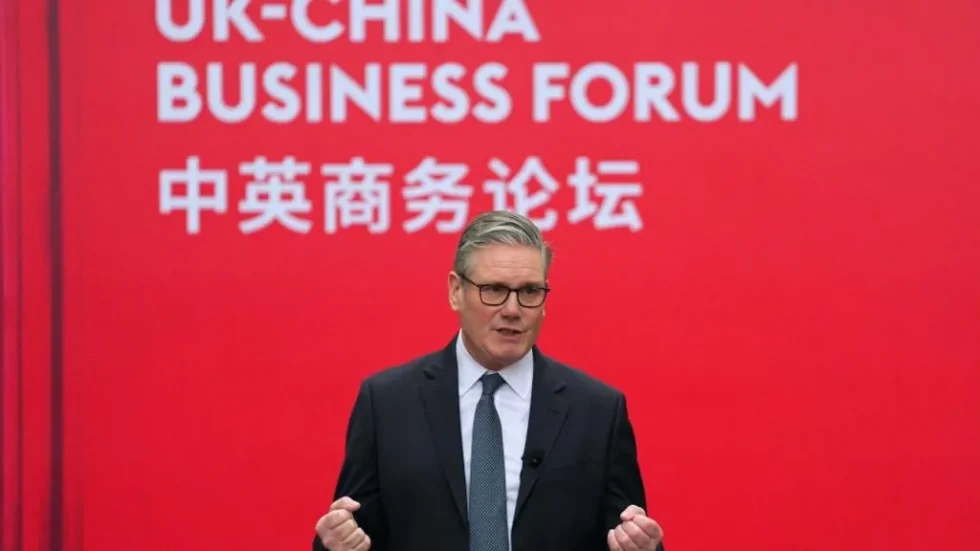
Donald Trump’s warning that it would be “very dangerous” for the United Kingdom to deepen business ties with China underscores how global trade decisions are increasingly shaped by geopolitical pressure rather than pure economic logic. The timing of the remarks as UK Prime Minister Keir Starmer arrived in Shanghai adds weight to the message and signals renewed US scrutiny over how allies align their economic strategies.
From an analysis perspective, the comments reflect a broader effort to influence allied decision-making through strategic warnings instead of formal policy. The United States has long viewed China’s economic expansion as both a commercial and security challenge. By publicly cautioning the UK, Trump is reinforcing the idea that trade relationships are no longer neutral choices, but signals of political alignment.
For the UK, the situation exposes a difficult balancing act. China represents a major source of trade, investment, and market access at a time when Britain is seeking post-Brexit economic stability. At the same time, pressure from Washington raises the cost of diversification. Any move toward China risks straining relations with a key security and economic partner, while stepping back could limit growth opportunities.
Markets tend to react negatively to this type of uncertainty. When trade policy becomes entangled with political loyalty tests, businesses delay investment and reassess exposure. Multinational firms operating across the US, UK, and China are particularly vulnerable, as shifting rhetoric can quickly translate into regulatory or tariff risk.
The episode also highlights a wider trend: economic alignment is becoming a strategic tool. Rather than imposing immediate restrictions, influence is exerted through messaging designed to shape expectations and behavior. This creates a climate where decisions are guided as much by future risk as by current opportunity.
For global markets, the message is clear. Trade flows are increasingly subject to geopolitical recalibration, and traditional allies are being asked to choose not just partners, but sides. As economic competition hardens into strategic rivalry, uncertainty rather than growth becomes the dominant force shaping investment decisions.