



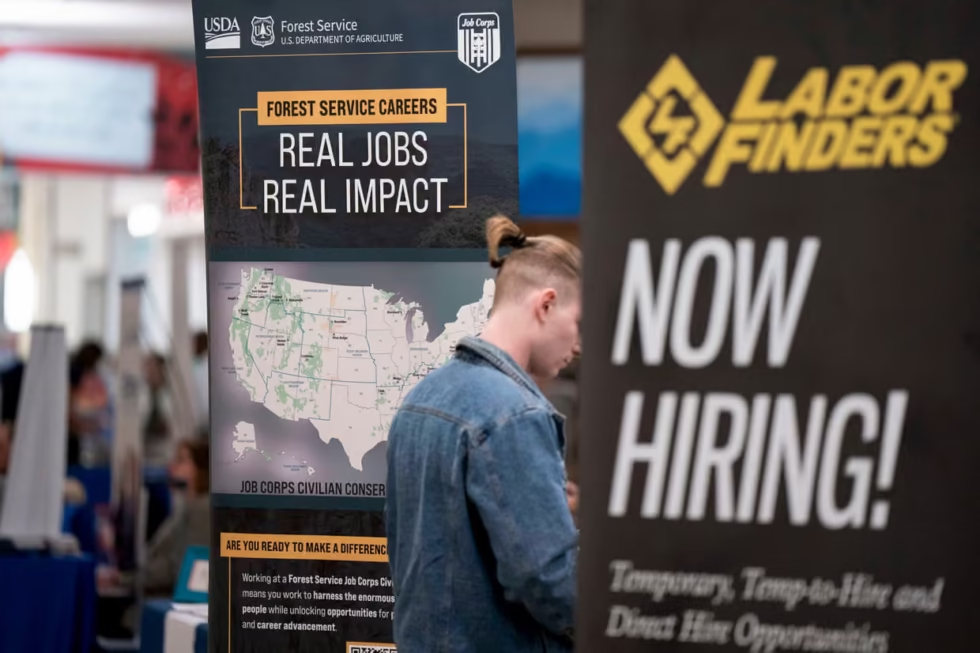
U.S. employers added 50,000 jobs in December, a figure that suggests the labor market may be slowing after a long period of resilience. While job growth remains positive, the pace has clearly cooled, prompting fresh discussion about where the economy is headed and how businesses are responding to changing conditions.
For many workers, job numbers are more than statistics. They reflect confidence, security, and opportunity. A lower hiring figure often signals caution. Companies appear to be reassessing expansion plans, focusing more on cost control and efficiency rather than aggressive growth. This shift is a natural response after years of tight labor conditions and rising expenses.
From a business perspective, the slowdown does not necessarily mean distress. Instead, it may reflect normalization. Employers who struggled to hire during peak labor shortages are now seeing more balance in the market. This allows companies to be more selective, stabilize payrolls, and reduce pressure on wages.
Human behavior plays a crucial role in how this data is interpreted. Some people view slower job growth as a warning sign of economic weakness, while others see it as a sign that inflationary pressure could ease. Both reactions influence spending, investment, and overall confidence. When workers feel uncertain, they tend to delay big decisions,homes, cars, career changes. which can ripple through the economy.
The December figure also raises questions about momentum going into the new year. Hiring often slows naturally toward the end of the year, but sustained moderation could indicate that employers are bracing for softer demand ahead. Industries tied closely to consumer spending and interest rates are especially sensitive to these shifts.
For policymakers, slower job growth adds another layer to decision making. A cooling labor market can help reduce inflation, but too much slowdown risks weakening economic stability. Striking the right balance remains a challenge.
What stands out most is the emotional undercurrent behind the data. Job growth affects how people feel about their future. When hiring slows, uncertainty tends to rise even if the economy remains fundamentally stable. Confidence, after all, is as important as numbers.
In conclusion, the addition of 50,000 jobs in December suggests the U.S. labor market is entering a more cautious phase. It’s not a collapse, but it is a signal. How employers, workers, and policymakers respond in the coming months will determine whether this slowdown becomes a temporary pause or the start of a broader shift in the economic cycle.