



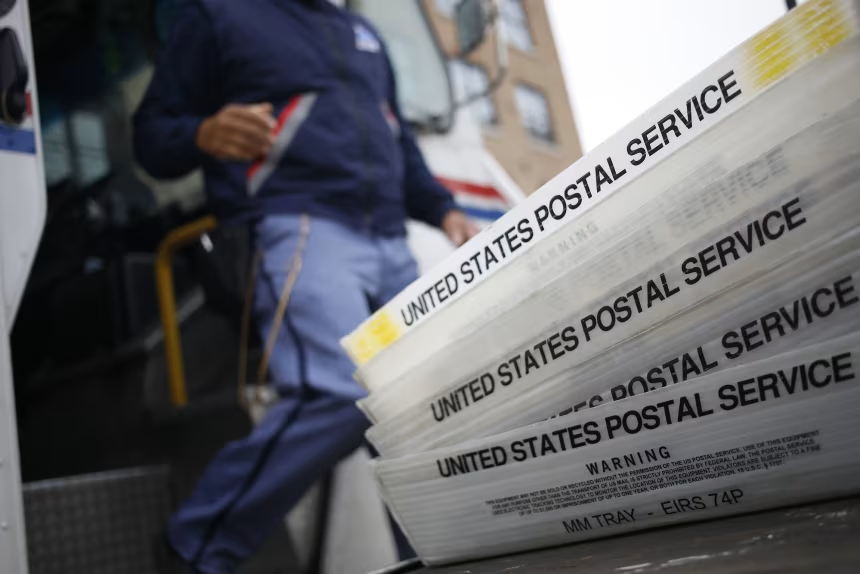
The U.S. Postal Service (USPS) has reached a new agreement with Amazon, underscoring the growing importance of e-commerce partnerships as shipping demands continue to rise. The deal comes at a time when the postal service is under pressure to improve efficiency, manage costs, and remain competitive in a rapidly evolving delivery market.
Amazon is one of USPS’s largest customers, relying heavily on the postal service for last-mile deliveries, particularly in rural and hard-to-reach areas. Under the updated arrangement, USPS will continue handling a significant volume of Amazon packages, especially during peak periods like the holiday season. The partnership highlights how intertwined public infrastructure and private logistics have become in modern commerce.
For USPS, the deal represents a critical revenue stream. Package delivery has become one of the postal service’s few growth areas as traditional mail volumes continue to decline. By working with Amazon, USPS gains steady business that helps offset losses from shrinking first-class mail usage. However, the relationship has not been without controversy, with critics questioning whether shipping rates fully cover USPS’s costs.
Supporters of the agreement argue that Amazon’s volume allows USPS to operate more efficiently by spreading fixed costs across more deliveries. They also note that without large commercial partners, the postal service would face even greater financial strain. USPS leadership has emphasized that recent pricing reforms are designed to ensure long-term sustainability and fair compensation for services rendered.
From Amazon’s perspective, the deal provides reliability and nationwide reach. While Amazon has invested heavily in its own delivery network, USPS remains a crucial partner, especially during demand surges. The company benefits from USPS’s established infrastructure, which enables consistent service without the need for duplicative expansion.
The agreement also carries broader implications for the logistics industry. As online shopping continues to grow, partnerships between public institutions and private corporations are becoming increasingly common. These relationships raise ongoing questions about competition, pricing transparency, and the role of government-backed services in the private marketplace.
For consumers, the impact is largely behind the scenes. The USPS–Amazon deal helps ensure timely deliveries during high-demand periods, reducing delays and bottlenecks. However, debates about cost, labor strain, and service quality remain part of the conversation.
Ultimately, the new USPS–Amazon deal reflects the realities of modern shipping. As e-commerce reshapes consumer expectations, the postal service must balance its public mission with financial survival. Whether this partnership proves sustainable in the long run will depend on how effectively USPS can manage volume, pricing, and operational demands in an increasingly competitive delivery landscape.