


Oil Price Surge Iran Blockade Pushes Markets Toward New Risk Zone
Oil Prices Jump as Supply Fears Intensify
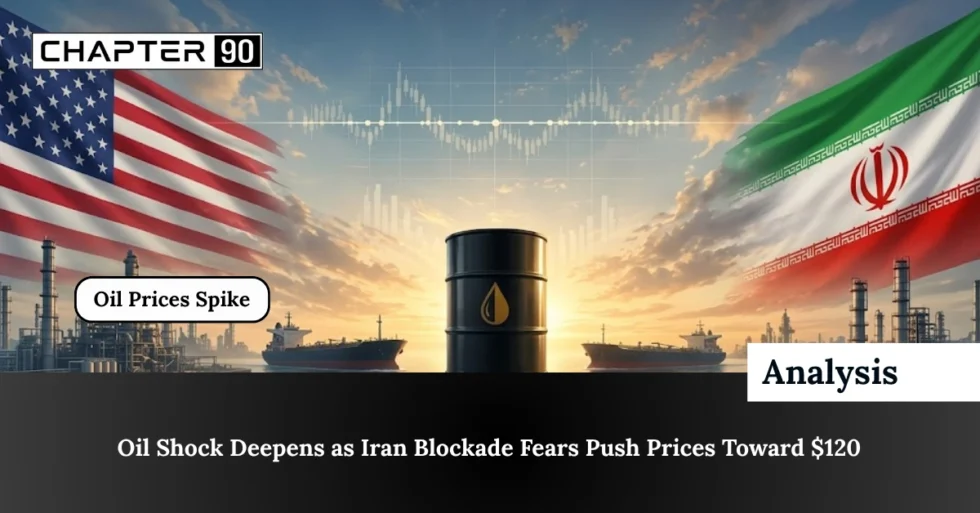
The oil price surge Iran blockade situation is driving global markets into a high-risk phase, with crude prices jumping close to $117 per barrel.
This sharp move reflects growing concerns that extended disruption could hit one of the world’s most critical oil routes.
What Happened: Blockade Fears Trigger Market Reaction
The oil price surge Iran blockade is linked to reports of an extended disruption affecting shipping flows near key energy routes.
Markets reacted immediately, pricing in the risk of reduced supply.
Supply risk ↑ → trader panic ↑ → oil prices ↑
Background: Why This Region Matters So Much
Global oil markets heavily depend on shipments passing through the Strait of Hormuz.
A large percentage of the world’s oil exports move through this narrow channel.
This explains why the oil price surge Iran blockade is triggering such a strong reaction.
Core Reason: Fear of Supply Disruption
The main driver behind the oil price surge Iran blockade is not an actual shortage yet it is the fear of disruption.
Blockade risk → supply uncertainty
Traders anticipate a shortage
Prices rise before the impact happens
This is a forward-looking market move, not just a reaction to current supply.
Power Players Driving the Situation
The crisis involves key actors:
- Iran → central to the blockade narrative
- Global oil traders → reacting to risk
- Governments and policymakers → managing diplomatic and economic response
These players shape the direction of the oil price surge Iran blockade.
Market and Economic Impact
The oil price surge Iran blockade have immediate and wide-ranging effects:
- Fuel prices are likely to rise globally
- Inflation pressure increases
- Transportation and production costs go up
- Stock markets face volatility
Higher oil prices often slow economic growth if sustained.
What This Means Going Forward
The oil price surge Iran blockade signals a period of continued uncertainty.
Prolonged disruption → higher prices
De-escalation → rapid correction
Markets will now closely watch geopolitical developments as oil becomes the central driver of global risk sentiment.