



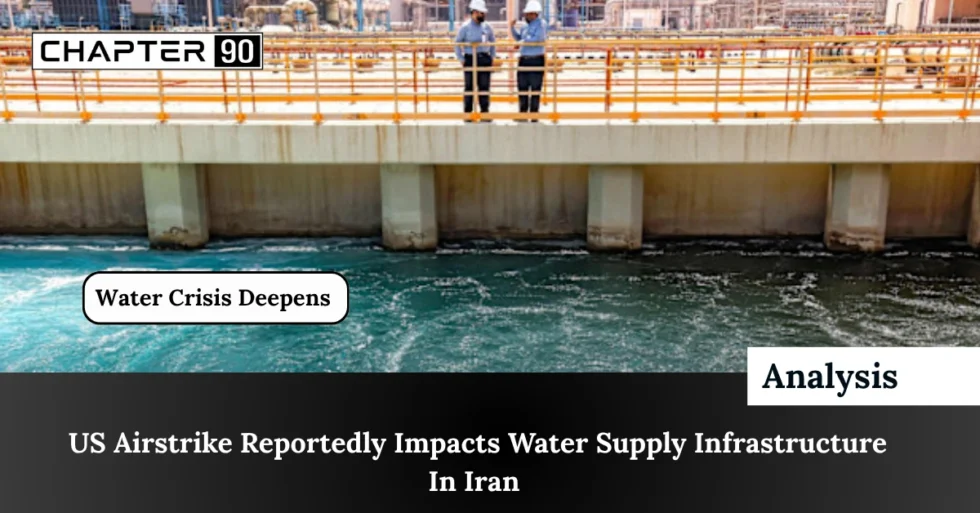
Military Attacks Damage Water Facilities in Hormuz Area
Thousands of residents in southern Iran were left without access to drinking water after two water storage facilities were damaged during recent military strikes near the Strait of Hormuz. and Local authorities reported that the damaged infrastructure supplied water to around 20000 people living across several villages in the region and the incident occurred during a period of extreme heat with temperatures rising above 100 degrees Fahrenheit.
A heatwave, then this
Southern Iran was already dealing with brutal heat, temperatures above 100 degrees Fahrenheit, when two water storage reservoirs near the Strait of Hormuz were hit during recent military activity and the damage cut off water access for roughly 20,000 people spread across several villages. For a region already struggling with the heat, losing the water supply on top of it made an already difficult situation a lot worse, almost overnight.
Not random damage, according to early reviews
So how did this happen? That’s the question a lot of people are asking now. Satellite images and assessments from people on the ground suggest the reservoirs were hit directly, not damaged as some kind of side effect of broader fighting nearby. Officials who manage the regional water network have confirmed two reservoirs took the hit, and they’ve already started emergency measures to get water flowing again to the communities cut off.
Iran’s government isn’t staying quiet about it
Officials in Iran came out strongly against the strike, calling the reservoirs essential civilian infrastructure, not military targets by any stretch and the government representatives have pointed out that these facilities were the main source of drinking water for nearby villages and their argument is straightforward: destroying water infrastructure during a heatwave doesn’t just cause inconvenience, it puts people’s health and safety at real risk.
The images tell their own story
Local media has released satellite photos and video showing the aftermath at both sites. One reservoir has a large hole in its roof. The other looks like it was hit from directly above, almost in a straight line down and thePeople who study this kind of imagery for a living say the damage pattern looks deliberate, not the kind of scattered destruction you’d see from something accidental.
On the ground, it’s a simpler problem: no water
Step back from politics for a second, and what’s left is pretty basic. Families in these villages don’t have water coming out of their taps right now. Local authorities have sent in mobile water tanks as a stopgap, and that’s helping, but it’s not a real fix. Community leaders keep coming back to the same point, that getting the actual infrastructure repaired needs to happen soon, because the heat isn’t letting up.
This didn’t happen in isolation
It’s worth remembering the backdrop here. US-Iran tensions have been elevated for a while now, and military activity across the region hasn’t really slowed down despite ongoing diplomatic efforts and so this incident lands in an already tense environment. It’s adding to that tension rather than existing apart from it.
Should water systems be off-limits during conflicts?
This isn’t the first time something like this has sparked debate and it probably won’t be the last. When water systems get damaged during military operations, the conversation about protecting civilian infrastructure comes right back up. Some experts argue these facilities should have some kind of protected status regardless of what’s going on militarily. Others point out how messy that gets in practice. Either way, the discussion around this particular incident is still very much active.
What comes next
Right now, the focus is on getting through the immediate crisis and the emergency water deliveries are buying time, but everyone on the ground knows it’s temporary. The real solution is repairing the reservoirs themselves, and until that’s done, life in these villages is going to stay disrupted in a pretty significant way.
FAQs (Frequently Asked Questions)
What exactly happened to the water facilities?
Two water storage reservoirs near the Strait of Hormuz were damaged during recent military strikes. The damage left roughly 20,000 people across several villages without reliable drinking water, right as the region was dealing with a severe heatwave.
How many people does this affect?
Around 20,000 residents, based on figures from local authorities. That’s the population spread across the villages that relied on these two reservoirs for their water.
Why is this story getting so much coverage?
Mainly because these were civilian water facilities, not military sites. When something like that gets hit, especially with the kind of precision suggested by the satellite imagery, it naturally raises a lot of questions about what happened and why.
What’s actually being done for the affected residents?
Mobile water tanks and temporary supply points have been set up by local authorities. It’s an emergency fix while longer-term repairs to the reservoirs are figured out.
Why does the Strait of Hormuz matter here?
It’s one of the most important oil shipping routes on the planet. It’s located right where a lot of regional tension tends to play out. Anything happening near it tends to get extra attention because of how much rides on that waterway stay stable.
Is there an investigation into what caused this?
Yes. Analysts and regional officials are still working through satellite imagery and other evidence to figure out the full picture of what happened. That process is ongoing.
Stay informed on the latest international developments from Chapter Ninty.