


U.S. Labor Market Demonstrates Stability with Hiring Gains in March
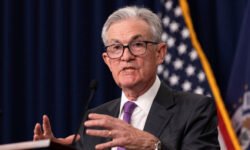
The United States labor market showed signs of stability in March, with job openings holding near 6.9 million while hiring activity strengthened to its highest level in over a year. The latest data provides a key signal for policymakers at the Federal Reserve, led by Jerome Powell, as they assess inflation risks and future interest rate decisions.
According to the U.S. Department of Labor, the labor market is shifting from rapid expansion to a more balanced phase, reflecting the impact of higher interest rates and global economic uncertainty.
US Job Openings Hold Near 6.9 Million as Hiring Rebounds
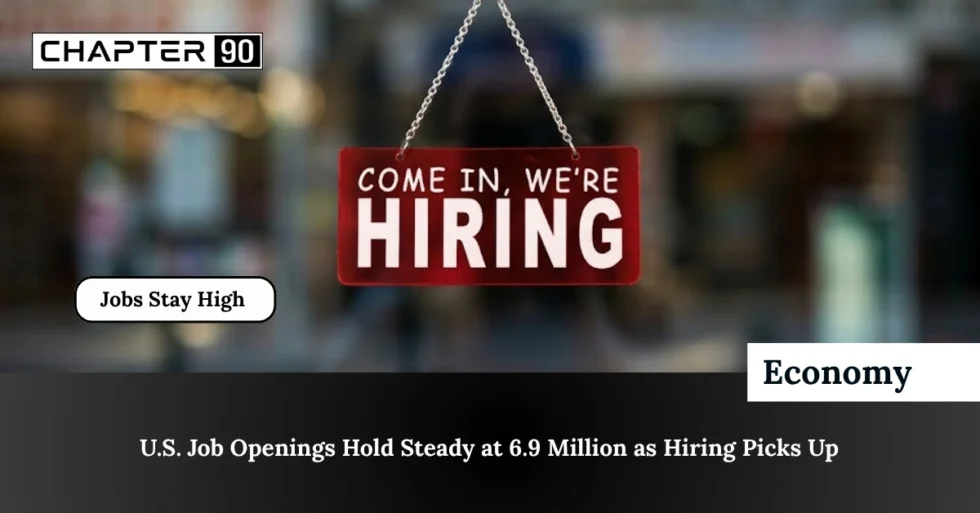
Job openings stood at 6.87 million in March, slightly down from 6.92 million in February, according to the Job Openings and Labor Turnover Survey.
At the same time, hiring rose to 5.55 million, marking the strongest level since early 2024. This increase suggests that businesses are still actively expanding their workforce, even as overall demand for workers stabilizes.
The combination of steady job openings and stronger hiring indicates that the labor market is not weakening but transitioning into a more sustainable and balanced phase.
Why Higher Interest Rates Are Slowing Job Growth
The moderation in job openings reflects the impact of tighter monetary policy.
Higher borrowing costs, driven by interest rate decisions from the Federal Reserve, have reduced incentives for aggressive business expansion. Companies are becoming more selective, focusing on efficiency rather than rapid hiring.
At the same time, global uncertainties, including geopolitical tensions and rising energy prices, are adding pressure to business confidence. These factors are contributing to a slowdown in job creation while maintaining stable employment levels.
Key Players Shaping the Labor Market Outlook
The labor market is being influenced by policymakers, businesses, and workers.
The Federal Reserve plays a central role in shaping economic conditions through interest rate policy, while Jerome Powell has emphasized that labor market strength remains a key factor in future policy decisions.
Meanwhile, businesses are adjusting hiring strategies to manage rising costs, and workers are showing confidence by switching jobs more frequently, reflected in higher quit rates.
This interaction between policy, corporate strategy, and workforce behavior is defining the current labor market environment.
Economic and Market Impact of Labor Stability
A stable labor market supports consumer spending, which is a major driver of the US economy.
At the same time, slower growth in job openings suggests that inflation pressures may gradually ease. This creates a complex situation for financial markets, where strong employment data can delay expectations for interest rate cuts.
Investors are closely monitoring labor trends, as they directly influence economic growth, inflation, and monetary policy decisions.
Long-Term Labor Trends and Market Adjustment
The current data reflects a broader shift in the labor market.
Job openings have declined significantly from a peak of 12.3 million in 2022, when the economy was recovering rapidly from the pandemic. Since then, tighter monetary policy and changing business strategies have moderated demand for workers.
Recent hiring patterns also show volatility, with mixed results across early 2026. However, layoffs remain relatively low, indicating that the market is adjusting rather than weakening.
This gradual normalization suggests that the labor market is entering a more stable, post-recovery phase.
What Comes Next for Jobs and Interest Rates
Looking ahead, economists expect moderate job growth in the coming months.
Forecasts suggest job gains may remain steady, while the unemployment rate is projected to hold around 4.3 percent. These levels indicate that the labor market can sustain stability even with slower growth.
The Federal Reserve is expected to closely monitor these trends. Any signs of significant weakening could influence future interest rate decisions.
Conclusion: A Stable Labor Market Signals Economic Transition
The latest US labor data highlights a key transition in the economy.
The balance between steady job openings and stronger hiring reflects resilience, but also signals a shift away from rapid expansion toward sustainable growth.
As policymakers, businesses, and investors navigate this environment, the labor market will remain one of the most important indicators shaping economic direction in 2026.
For more insights on markets, the economy, and global trends, visit our homepage