



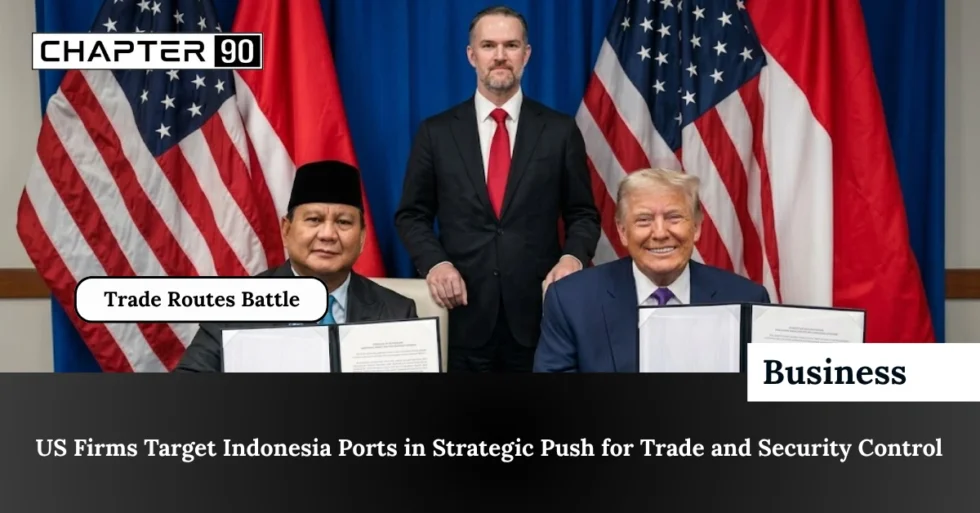
US Indonesia Maritime Investment Expands as Strategic Port Partnerships Take Shape
US Firms Move Into Critical Trade Region
The US Indonesia maritime investment push is gaining momentum as American companies target port development and security partnerships across Indonesia.
This move highlights growing interest in controlling key global shipping routes and strengthening regional influence.
What Happened: Strategic Expansion Into Ports and Security
The US Indonesia maritime investment involves US-based maritime firms seeking to modernize ports and enhance security infrastructure.
These efforts include collaboration with Indonesian authorities to improve logistics, surveillance, and operational efficiency.
Infrastructure upgrade → trade efficiency → strategic presence
Past Context: Rising Importance of Southeast Asia
Southeast Asia has become a critical hub for global trade, with Indonesia sitting along key shipping routes connecting Asia, the Middle East, and global markets.
The US Indonesia maritime investment reflects a long-term shift where major economies are competing for influence in this region.
Core Reason: Trade Control and Geopolitical Positioning
The main driver behind the US Indonesia maritime investment is strategic control over global supply chains.
Securing shipping lanes
Reducing trade disruptions
Countering regional competition
This is not just infrastructure investment, it is a move to strengthen economic and geopolitical positioning.
Power Players Shaping the Strategy
The US Indonesia maritime investment is influenced by multiple actors:
- US maritime companies → expanding global footprint
- Indonesia government → seeking investment and modernization
- Regional competitors → influencing strategic decisions
- Global shipping networks → driving demand for efficiency
These players are shaping the future of maritime trade.
Market and Economic Impact
The US Indonesia maritime investment carries significant economic implications:
- Improved port efficiency → faster global trade flows
- Increased investment → economic growth in Indonesia
- Strengthened supply chains → reduced disruptions
- Potential impact on energy and commodity transport
Better logistics → lower costs → stronger global trade stability
What This Means Going Forward
The US Indonesia maritime investment signals a long-term shift toward infrastructure-led economic influence.
More partnerships expected
Increased competition in the region
Greater focus on trade security
Investors and businesses will watch how these developments affect global shipping dynamics.
What It Means Going Forward
The US Indonesia maritime investment reflects a broader trend where trade routes are becoming strategic assets.
As global competition intensifies, control over infrastructure will play a key role in shaping economic power.
Because in today’s world, influence is not just built through markets it is secured through movement of goods.